
Finding the right water filter in Kenya starts with one important question: What is in your water?
Water from a municipal supply, borehole, well, rainwater tank, or river can have very different quality issues. A filter that works well for one water source may not be the right choice for another.
This guide explains the main types of water filters available in Kenya, what they remove, and how to choose a suitable system for your home, office, restaurant, school, farm, or business. PureFlex Water Solutions supplies water filtration equipment and can help you identify a suitable system based on your water source, test results, flow requirements, and intended use.
Why Do You Need a Water Filter in Kenya?
Water can contain particles, chlorine, unpleasant tastes, odors, dissolved minerals, and other contaminants.
The problem is that clear water is not always safe water. Some water quality problems cannot be identified by looking at the water.
Kenya has a national specification for potable water. The Kenya Bureau of Standards potable water specification covers requirements, sampling, and test methods for potable water intended for human consumption.
The World Health Organization Guidelines for Drinking-water Quality also recommend managing drinking-water risks based on the hazards that may affect water quality.
This is why water testing is a useful first step before buying a water filter.
If you are unsure about your water quality, PureFlex’s guide on how to test water quality at home can help you understand the basic checks you can make.
What Type of Water Filter Is Best in Kenya?
There is no single water filter that is best for every household.
The right system depends on your water source and the problem you want to solve.
Common options include:
- Sediment filters
- Activated carbon filters
- Ultra-filtration systems
- Reverse osmosis systems
- Alkaline water filters
- Multi-stage drinking water systems
- Whole-house filtration systems
For example, a sediment filter can help remove suspended particles, while activated carbon can improve taste and reduce certain chemicals.
Reverse osmosis is a more advanced treatment option that can reduce many dissolved substances.
PureFlex Water Solutions can help you compare these options and select a system that matches your water quality and daily demand.
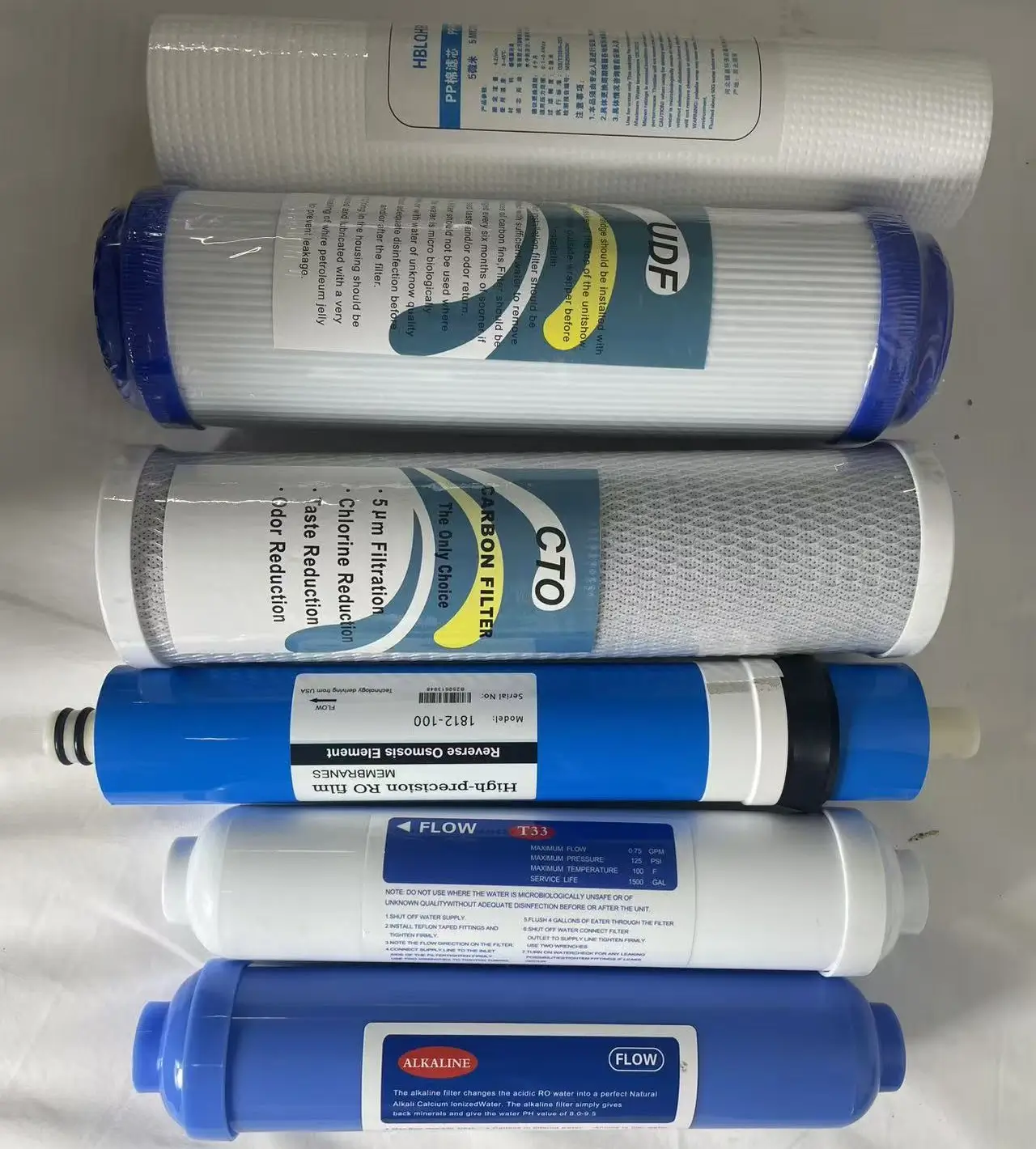
1. Sediment Water Filters
Sediment filters are often used as the first stage of a water filtration system.
They are designed to trap physical particles such as:
- Sand
- Dirt
- Rust particles
- Silt
- Other suspended matter
A common option is a 5 micron PP water filter. This type of cartridge can be useful as a pre-filter in a multi-stage system.
Sediment filtration is especially useful where water contains visible particles or where downstream filters need protection from dirt and sediment.
However, a sediment filter should not be expected to solve every water quality problem. It is mainly a physical filtration stage.
When you buy a sediment filter from PureFlex, make sure the cartridge rating and housing size are suitable for your water flow and the amount of sediment entering the system.
2. Activated Carbon Water Filters
Activated carbon is widely used in household drinking-water systems.
It can help improve the taste and smell of water. It can also reduce chlorine and certain organic compounds, depending on the type and quality of the carbon filter.
For example, an activated carbon filter can be used as part of a multi-stage drinking-water system.
Carbon filtration is often combined with sediment filtration.
A typical setup may start with a sediment filter, followed by activated carbon, and then use another treatment stage depending on the water quality.
PureFlex can supply activated carbon filtration components for domestic, office, hospitality, and commercial water treatment applications.
3. UDF Water Filters
UDF stands for granular activated carbon.
A UDF filter is commonly used as a carbon filtration stage in water purification systems.
It can help reduce chlorine, unpleasant odors, and some organic contaminants.
UDF filtration can be useful as part of a reverse osmosis system or another multi-stage water treatment setup.
The correct filter configuration depends on the source water and the results of water testing.
If you are unsure whether a UDF filter is suitable for your system, PureFlex can help you assess the required filtration stages and replacement schedule.
4. T33 Water Filter Cartridges
A T33 cartridge is commonly used as a final polishing filter in drinking-water systems.
A T33 filter cartridge can help improve the taste and odor of treated water before it reaches the drinking tap.
It is often found in reverse osmosis systems.
Because it is normally used near the end of the filtration process, it should not be viewed as a replacement for proper pre-filtration or water treatment.
PureFlex supplies replacement filtration components, including T33 cartridges, for compatible drinking-water and reverse osmosis systems.
5. Reverse Osmosis Water Filters
Reverse osmosis, commonly called RO, is one of the most advanced filtration methods used in many drinking-water systems.
An RO system pushes water through a semi-permeable membrane. The membrane can reduce many dissolved substances that ordinary sediment and carbon filters do not remove.
This makes RO useful for certain water sources with high levels of dissolved solids.
If you are dealing with borehole water, salty water, or water with high total dissolved solids, testing the water first can help determine whether RO is appropriate.
PureFlex supplies reverse osmosis equipment and components for homes, offices, restaurants, institutions, and commercial water treatment applications.
Our guide on how reverse osmosis purifies water explains the process in more detail.
We also explain what reverse osmosis is and how the technology is used in water treatment.
100 GPD Reverse Osmosis Membrane
For smaller drinking-water systems, a 100 GPD RO membrane can be an important component.
A 100 GPD membrane is designed for systems that need a moderate volume of treated water.
The actual production rate can vary depending on water pressure, temperature, feed-water quality, and membrane condition.
You can learn more about the 100 GPD reverse osmosis water filter membrane used in RO systems.
For higher-capacity applications, a 400 GPD reverse osmosis membrane may be more suitable.
The correct membrane should always match the design and capacity of the complete filtration system. PureFlex can help you choose a compatible membrane based on your system’s capacity, operating pressure, and water quality.
6. Under-Sink Water Filters
An under-sink water filter is installed below the kitchen sink and normally supplies treated water through a dedicated drinking-water tap.
This can be a convenient option for households that want filtered water without installing a large system for the entire house.
An under-sink alkaline water filter is one option for point-of-use drinking-water treatment.
Under-sink systems can be especially useful when the main goal is to improve the quality of water used for drinking and cooking.
If you are comparing different kitchen options, PureFlex’s guide to kitchen water purifiers provides more information.
PureFlex can supply under-sink filtration systems and help you choose a suitable configuration for your kitchen, available space, and daily water consumption.
What Is the Best Water Filter for Borehole Water in Kenya?
Borehole water can vary greatly from one location to another.
Some boreholes may have relatively clean water, while others may contain high levels of hardness, iron, manganese, fluoride, salinity, or other dissolved substances.
This means you should not buy a water filter simply because it is advertised as a borehole water filter.
Instead, test the water first.
PureFlex’s guide on whether borehole water is safe for drinking explains why testing is important.
You can also read our guide on how to purify borehole water at home for a broader look at treatment options.
If the water has high dissolved solids, reverse osmosis may be considered. If the main problem is sediment, a sediment filter may be enough for that particular stage.
Depending on the test results, PureFlex may recommend a combination of sediment filtration, activated carbon, iron or manganese treatment, water softening, ultraviolet treatment, or reverse osmosis.
Do Water Filters Remove All Contaminants?
No.
This is one of the most important things to understand when choosing a water filter.
Different filtration technologies target different water quality problems.
For example:
| Filter type | Common purpose |
|---|---|
| Sediment filter | Sand, dirt, silt and suspended particles |
| Activated carbon | Taste, odor and chlorine reduction |
| UDF carbon | Carbon filtration and water polishing |
| T33 | Final taste and odor polishing |
| RO membrane | Reduction of many dissolved substances |
| Alkaline filter | Post-treatment and mineral adjustment, depending on design |
No single cartridge should be assumed to remove every possible contaminant.
The World Health Organization notes that drinking-water risks can involve microbial, chemical, physical, and other hazards. Treatment should therefore be selected according to the actual water quality problem.
For more information, see the WHO Guidelines for Drinking-water Quality.
PureFlex can help you select a filtration combination based on your water test results rather than relying on a one-size-fits-all filter.
Water Filter Kenya: Should You Test Your Water First?
Yes.
Water testing can help you avoid buying the wrong filtration system.
Useful parameters can include:
- pH
- Turbidity
- Total dissolved solids
- Electrical conductivity
- Hardness
- Iron
- Manganese
- Fluoride
- Nitrates
- Chlorine
- Microbiological parameters
The exact tests required depend on your water source and intended use.
For example, a household using municipal water may have different concerns from a home using borehole water.
Our guide on how to test water turbidity explains one of the basic physical water quality checks.
You can also read ways to make water safe for drinking for an overview of different treatment approaches.
Before PureFlex recommends a complete water purification system, provide as much information as possible about your water source, existing plumbing, expected daily consumption, and any available laboratory results.
How Much Does a Water Filter Cost in Kenya?
The price of a water filter in Kenya depends on several factors.
These include:
- Filter technology
- Number of filtration stages
- Water treatment capacity
- Membrane size
- Filter housing
- Pump requirements
- Installation requirements
- Replacement cartridge costs
- Water quality
- Intended application
A simple sediment filter can cost much less than a complete reverse osmosis system.
Likewise, a small under-sink drinking-water system will normally have different costs from a commercial water purification plant.
This is why comparing systems only by purchase price can be misleading.
A cheaper system may require more frequent cartridge replacement or may not address the actual problem in your water.
When requesting a quotation from PureFlex, ask for the complete system cost, installation requirements, replacement parts, maintenance needs, and expected output. This gives you a more realistic view of the long-term cost of owning the system.
How Often Should You Replace Water Filter Cartridges?
There is no universal replacement period for every filter.
Replacement depends on water quality, daily consumption, filter capacity, and the type of cartridge.
Sediment filters can become clogged when the incoming water contains a lot of dirt or suspended particles.
Carbon cartridges also lose their effectiveness over time.
RO membranes have a different replacement cycle and should be checked according to system performance and manufacturer specifications.
Signs that a filter may need attention include:
- Reduced water flow
- Changes in taste
- Changes in odor
- Increased pressure drop
- Visible cartridge discoloration
- Poor system performance
Regular maintenance helps keep a water filtration system working properly.
PureFlex can supply replacement cartridges and filtration components and can advise you on a practical maintenance schedule for your system.
Water Filter for Home Use in Kenya
For a typical home, the best system depends on the source of the water.
Municipal water
A sediment and carbon-based system may be suitable when the main concerns are particles, chlorine, taste, or odor.
Borehole water
Testing is particularly important.
A borehole may require several treatment stages depending on its chemical and physical characteristics.
Rainwater
Rainwater should also be assessed and treated appropriately before it is used for drinking.
Salty or high-TDS water
Reverse osmosis may be considered when dissolved substances are the main concern.
Our guide on how to purify salty water at home explains where RO can fit into this type of treatment.
PureFlex supplies home water filtration options for different water sources, including point-of-use systems, under-sink filters, and reverse osmosis units.
Water Filters for Offices, Restaurants and Businesses
Businesses may need larger filtration systems than ordinary households.
Restaurants, offices, schools, hotels, clinics, and other facilities can have higher water consumption.
The system should therefore be selected based on:
- Water source
- Water test results
- Daily water demand
- Peak demand
- Required treatment level
- Available installation space
- Maintenance requirements
A system that works well for a small household may not be suitable for a busy restaurant or commercial facility.
For larger water treatment applications, the required flow rate and storage capacity should be considered alongside the filtration technology.
PureFlex Water Solutions can supply filtration equipment for commercial and institutional applications and help you plan the required treatment stages, storage, flow rate, and maintenance requirements.
Choosing a Water Filter Supplier in Kenya
When buying a water filter, do not focus only on the price.
Ask questions such as:
- What contaminants is the system designed to reduce?
- Has the source water been tested?
- What filter stages are included?
- How often do the cartridges need replacement?
- Are replacement cartridges available?
- What is the expected water production rate?
- Does the system require a pump?
- What maintenance is required?
- Is installation available?
A good filtration system should be matched to the water rather than selected from a generic list of products.
When you buy from PureFlex Water Solutions, ask for guidance on the complete filtration setup, compatible replacement parts, installation, and ongoing maintenance. The right supplier should help you understand why a particular system is recommended.
Water Filter Kenya: The Bottom Line
The best water filter in Kenya is not necessarily the most expensive one.
It is the system that addresses the specific problems found in your water.
For simple sediment problems, a PP sediment filter may be enough for the relevant filtration stage. Carbon filters can help with taste, odor, and chlorine. Where dissolved substances are the main concern, reverse osmosis may be a better option.
For borehole water, testing should come before choosing the treatment system.
If you want to understand the different options available for drinking water, see our guide to home drinking water filtration systems.
You can also explore our information on the best under-sink reverse osmosis systems in Kenya and how to make river water safe for drinking.
PureFlex Water Solutions supplies water filters, reverse osmosis systems, membranes, cartridges, and related water treatment equipment in Kenya. Contact PureFlex to discuss your water source, test results, required capacity, installation needs, and the most suitable filtration solution for your home or business.
Frequently Asked Questions About Water Filters in Kenya
What is the best water filter in Kenya?
There is no single best filter for every situation. The right choice depends on the water source and the contaminants that need to be reduced. Water testing is the best starting point. PureFlex can help you compare suitable filtration options based on your water quality and intended use.
Which water filter is best for borehole water?
It depends on the borehole water quality. Borehole water may require sediment filtration, carbon filtration, iron removal, softening, reverse osmosis, or another treatment method. PureFlex can help you identify the appropriate combination after reviewing your water test results.
Can a water filter make borehole water safe to drink?
A suitable treatment system can improve water quality, but the system must be selected based on water testing. A basic sediment filter alone should not be assumed to make every borehole safe for drinking.
Does reverse osmosis remove minerals?
Reverse osmosis can reduce many dissolved minerals and other substances. The exact reduction depends on the membrane, feed water, operating conditions, and system design.
How much does a water filter cost in Kenya?
Prices vary widely depending on the filtration technology, capacity, number of stages, installation requirements, and water quality. It is better to compare the complete system and its running costs rather than the initial price alone. PureFlex can provide guidance on the equipment and components required for your application.
Where can I buy water filters in Kenya?
You can buy water filters and water treatment equipment from PureFlex Water Solutions. Before buying, identify your water source and test the water where possible so that you can select the correct treatment method. PureFlex can help you choose suitable filters, membranes, cartridges, and complete water purification systems for domestic, commercial, and institutional use.
Leave a Comment