
If your borehole water tastes salty, your tap water sometimes has an unpleasant smell, or you are uncomfortable drinking water from your municipal supply, you are not alone.
Across Kenya, households rely on very different water sources—from boreholes and municipal supplies to rivers and other surface-water sources. The challenge is that water that looks clear isn’t necessarily water that is suitable for drinking.
Kenya’s Water Services Regulatory Board (WASREB) states that drinking water should not be saline, should have low turbidity and colour, and should be free from disease-causing organisms and harmful chemicals. Its guidelines also note that surface water rarely meets these requirements without adequate treatment.
This is where choosing the best undersink reverse osmosis system can make a significant difference for the kitchen.
But RO is not automatically the answer to every water problem
This is one of the most important things to understand before buying.
If your water contains large amounts of sediment, iron, manganese, or other substances that can foul the membrane, pre-treatment may be necessary. RO systems can also produce reject water and require periodic replacement of filters and membranes.
That’s why choosing an RO system based purely on the number of stages can be a mistake.
What Is the Best Undersink Reverse Osmosis System?
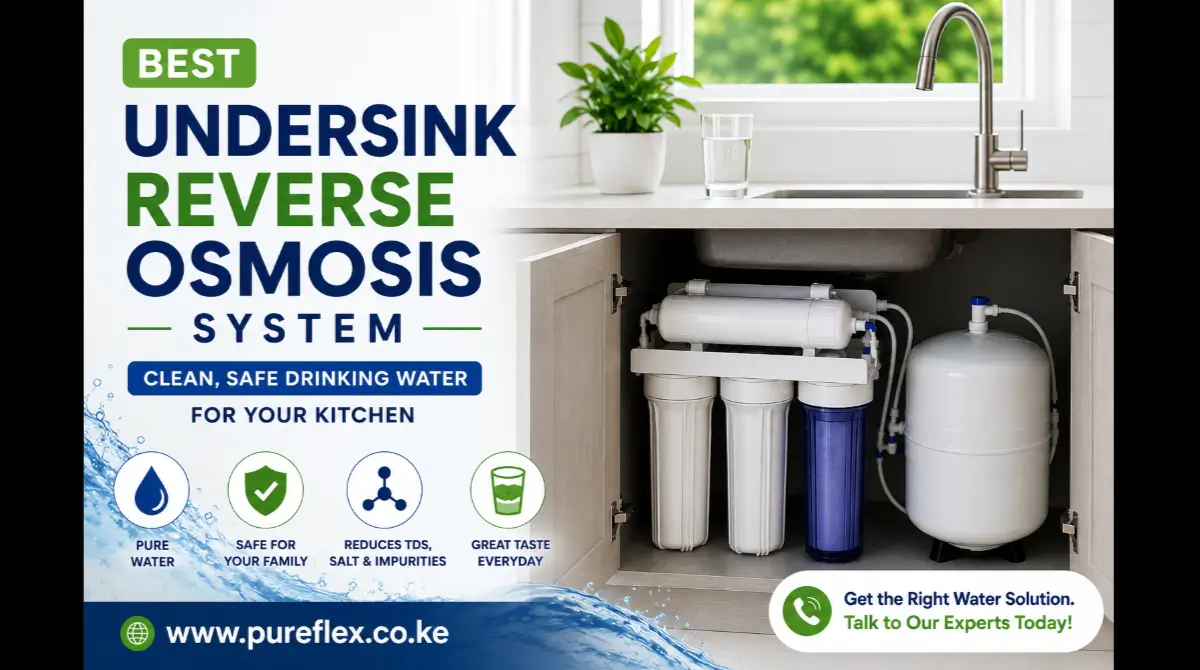
For a typical Kenyan kitchen, a good undersink RO system should provide a combination of:
1. Sediment filtration
The first stage commonly protects the system by reducing suspended particles such as dirt, rust and sediment.
This is particularly useful where incoming water may contain visible particles or where plumbing and storage tanks contribute sediment.
2. Activated carbon filtration
Carbon filtration can help reduce chlorine, unpleasant tastes and odours and certain organic contaminants.
This stage is particularly relevant when treating municipal water or water with noticeable taste and odour.
3. Reverse osmosis membrane
This is the core of the system.
The RO membrane provides a barrier capable of reducing many dissolved substances, including dissolved solids and various inorganic contaminants.
For households struggling with salty borehole water or high TDS, this is often the most important stage.
4. Post-filtration
Many domestic systems include a final carbon or polishing stage after the RO membrane to improve the taste and overall drinking experience.
5. Appropriate storage
Depending on the design, an undersink RO system may use a small pressurised storage tank so purified water is readily available when you open the dedicated drinking-water tap.
Best Undersink RO System for Salty Borehole Water
This is one of the most common situations where Kenyan homeowners start researching what is reverse osmosis.
Borehole water can look perfectly clear while still containing significant amounts of dissolved minerals and salts. If your borehole water has a noticeably salty taste, it is worth understanding how to purify salty water at home before choosing a treatment system.
If the main complaint is:
“The borehole water is salty.”
don’t simply buy a conventional sediment filter.
A sediment filter is designed primarily for particles. It does not perform the same function as an RO membrane for dissolved salts and TDS.
RO is specifically useful for reducing dissolved solids and salts.
Before buying an RO system for borehole water
It is sensible to establish what is actually in the water.
A water-quality test can help identify parameters such as:
- TDS
- pH
- Hardness
- Iron
- Manganese
- Chloride
- Fluoride
- Nitrate
- Microbiological quality
- Other parameters relevant to the water source
The results can determine whether a simple point-of-use RO system is sufficient or whether additional pre-treatment is needed.
This is particularly important for borehole water because two boreholes in different parts of Kenya can have very different water characteristics.
Best Undersink RO System for Dirty Municipal Water
Municipal water presents a different challenge.
You may receive treated water from the local water supplier, but the quality at your kitchen tap can still be affected by storage tanks, plumbing, intermittent supply and the condition of household infrastructure.
Kenya’s water regulator, WASREB, recognises water quality as an important component of water-service quality and publishes national drinking-water quality guidance.
An undersink RO system provides point-of-use treatment, meaning you don’t necessarily need to purify every litre of water entering your home.
Instead, the system can be connected to the kitchen drinking-water point.
That makes an undersink purifier particularly attractive for households that primarily want purified water for:
- Drinking
- Cooking
- Making tea and coffee
- Preparing food
- Filling bottles
The rest of the household can continue using the normal water supply for activities that don’t require RO-treated water.
What About River Water?
River and surface water require even more care.
If your household receives water from a river or another untreated surface-water source, do not assume that an undersink RO system alone makes the source safe.
Surface water can contain microbiological contaminants, suspended solids and other pollutants. The appropriate treatment process depends on the actual quality of the source.
A water test should therefore come before selecting equipment.
An RO system can be an important component of a treatment train, but the overall system may require appropriate pre-filtration and disinfection depending on the source.
The goal is not simply to buy the “strongest” purifier.
The goal is to design the right treatment process for the water you actually have.
5 Things to Check Before Buying an Undersink RO System in Kenya
1. Know Your Water Source
Start with the basics.
Is your kitchen water coming from:
Borehole → potentially high TDS, hardness or mineral content
Municipal supply → potentially chlorine, taste, sediment or plumbing-related concerns
River/surface water → potentially higher microbiological and suspended-solid concerns
Mixed sources → potentially changing water quality
Your water source is one of the first things that should influence your purifier selection.
2. Check TDS Before Assuming You Need RO
TDS means total dissolved solids.
A high TDS reading can indicate significant dissolved minerals and salts in water, although TDS alone does not tell you whether water is microbiologically safe or identify every contaminant present.
RO systems are particularly useful where reducing dissolved solids is an important treatment objective. EPA’s WaterSense performance criteria for point-of-use RO systems use TDS reduction as one of the performance measures.
For a Kenyan homeowner dealing with salty borehole water, testing TDS is therefore a useful starting point—but it should not replace a broader water-quality assessment when safety is a concern.
3. Don’t Choose a System Simply Because It Has “7 Stages”
More stages do not automatically mean better water.
A system with five well-designed stages can be more appropriate than a seven-stage system with unnecessary or poorly matched filtration components.
Look at what each stage actually does.
For example:
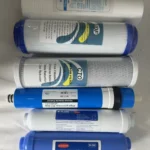
| Stage | Typical purpose |
|---|---|
| PP/Sediment | Reduces dirt, rust and suspended particles |
| Carbon | Reduces chlorine, taste and odour |
| CTO Carbon | Further carbon filtration |
| RO Membrane | Reduces dissolved solids and many dissolved contaminants |
| Post Carbon | Final taste polishing |
The exact configuration should depend on the incoming water.
4. Consider Your Kitchen Space
This is where undersink purification has a major advantage.
Instead of placing a bulky purifier on your kitchen counter, the filtration equipment can be installed inside the cabinet beneath the sink.
Your kitchen can therefore retain its clean appearance while providing a dedicated source of purified drinking water.
For apartments and modern homes where counter space is limited, this can be particularly convenient.
5. Ask About Replacement Filters
Buying the system is only the beginning.
Filters and membranes have a finite service life and need replacement according to water quality, usage and manufacturer recommendations. EPA guidance also notes that RO systems require periodic replacement of filter cartridges and membranes.
Before purchasing, ask:
- Are replacement filters readily available in Kenya?
- How much do replacement filters cost?
- Can the system be serviced locally?
- Is the RO membrane readily available?
- Who will install and maintain the system?
- Can the system be upgraded if water quality changes?
A cheap purifier that becomes difficult to maintain can become an expensive purchase over time.
Undersink RO vs Countertop Water Purifier
Both can be excellent choices, but they serve different needs.
| Feature | Undersink RO | Countertop Purifier |
|---|---|---|
| Installation | Under kitchen sink | On countertop |
| Counter space | Minimal | Uses counter space |
| Appearance | Mostly hidden | Visible |
| Drinking-water capacity | Typically higher | Depends on model |
| Installation complexity | Higher | Generally simpler |
| Best for | Permanent kitchen setup | Convenience and flexibility |
| RO availability | Excellent | Model-dependent |
| Ideal users | Homeowners, apartments, families | Renters, small kitchens, convenience-focused users |
Which should you choose?
If you want a permanent, discreet drinking-water solution, an undersink RO system is often the better choice.
If you don’t want plumbing modifications or need something easy to install and move, a countertop purifier may be more appropriate.
How Much Water Does an RO System Waste?
This is an important question that many buyers overlook.
RO systems produce treated water and a reject/concentrate stream. The exact recovery rate varies between systems and operating conditions.
EPA notes that conventional point-of-use RO systems can send significant amounts of water to drain, while newer high-efficiency systems can substantially reduce this waste.
So when comparing the best undersink reverse osmosis system, don’t look only at the purchase price.
Ask about:
Recovery rate + water efficiency + filter life + maintenance cost.
A slightly more efficient system may offer better long-term value.
Is an Undersink RO System Worth It for a Kenyan Home?
For the right water source, yes.
An undersink RO system can be particularly worthwhile if you are dealing with:
- Salty borehole water
- High TDS
- Unpleasant mineral taste
- Hard water
- Concerns about dissolved contaminants
- Municipal water that you don’t want to drink directly
- A desire for dedicated purified drinking water
However, if your main issue is simply visible sediment, you may not need RO.
And if you have untreated river or surface water, you should not rely on a basic domestic RO unit without first understanding the source and designing appropriate treatment.
The best system is the one matched to the problem.
Why Choose Pureflex Water Solutions?
At Pureflex Water Solutions, the focus is not on selling Kenyan households the biggest or most complicated purifier available.
The focus is on finding the right water solution for the kitchen.
Our range includes:
- Under-sink RO water purification systems
- Countertop water purifiers
- RO replacement filters and accessories
- Water purification components
- Installation and after-sales support
Whether you are dealing with salty borehole water in Nairobi or Kiambu, questionable municipal water, or simply want better drinking water at home, Pureflex can help you assess your needs and choose an appropriate purification solution.
Get the Right RO System for Your Water
Don’t buy an RO purifier simply because it has more stages or because someone recommended the same model to a neighbour.
Your water and kitchen are unique. Hence, your purification needs are unique.
Talk to Pureflex Water Solutions about your water source, TDS, taste, space and intended use, and find an undersink reverse osmosis system suited to your Kenyan home.
Frequently Asked Questions
What is the best undersink reverse osmosis system?
The best undersink RO system is one that matches your water quality, household usage, available space and treatment requirements. For salty or high-TDS borehole water, RO can be particularly useful because the technology reduces dissolved solids and salts.
Can an undersink RO system remove salt from borehole water?
Yes. Reverse osmosis is specifically capable of reducing dissolved salts and total dissolved solids. However, very challenging borehole water may require pre-treatment to protect the RO membrane.
Is RO suitable for borehole water in Kenya?
RO can be highly suitable for borehole water, particularly where TDS, dissolved minerals or salty taste are concerns. A water-quality test is recommended before selecting the system.
Can RO purify municipal water?
Yes. Point-of-use RO systems can treat water at a kitchen drinking-water tap. The appropriate configuration depends on the quality of the incoming municipal water.
Can an RO system make river water safe to drink?
RO can remove many contaminants, but untreated river water should not automatically be considered safe after installing a household RO system. River water may require additional pre-treatment and disinfection based on its quality.
Does RO remove TDS?
Yes. Reducing total dissolved solids is one of the key applications of reverse osmosis. Actual performance depends on the membrane, system design, incoming water and operating conditions.
Does an undersink RO system take up much kitchen space?
The main filtration components are installed inside the cabinet beneath the sink, leaving most of your countertop available for normal kitchen use.
How often should RO filters be changed?
There is no universal replacement interval. Filter life depends on water quality, consumption and the particular system. Follow the manufacturer’s maintenance schedule and monitor system performance.
Does an RO system waste water?
Yes. Conventional RO systems produce a reject-water stream. More efficient systems can reduce the amount of water wasted, so recovery rate is an important specification to consider before buying.
Should I buy a 5-stage or 7-stage RO system?
Don’t choose based solely on the number of stages. Examine what each stage does and whether it addresses your actual water-quality problem. A properly configured five-stage system can be more appropriate than a seven-stage system with unnecessary filtration.
Leave a Comment