
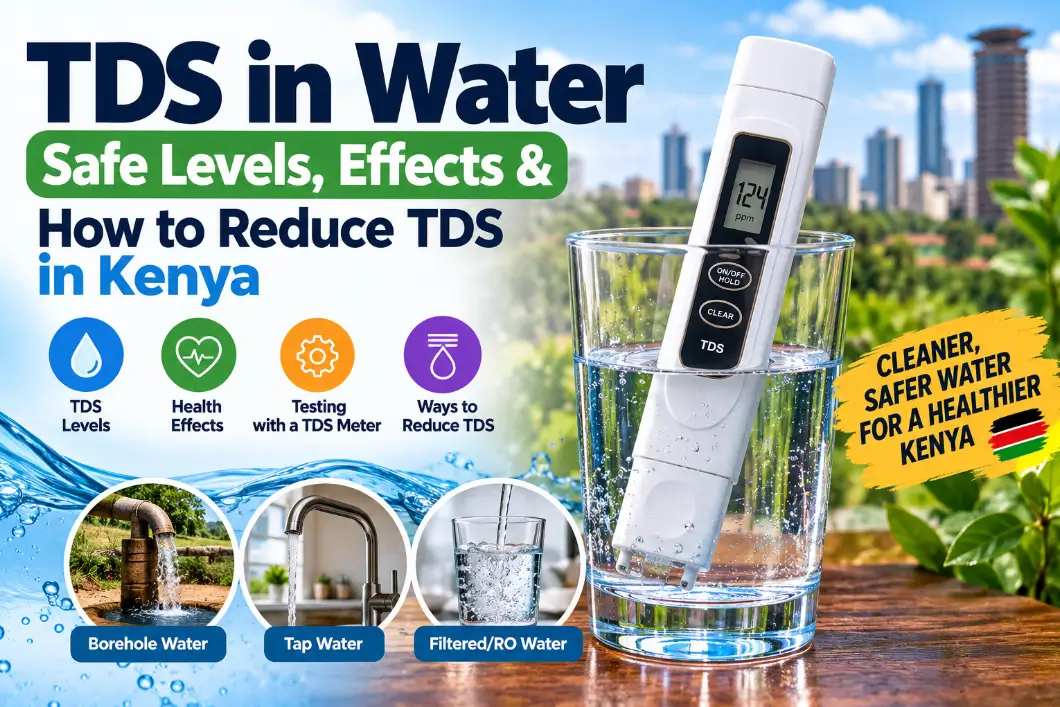
TDS stands for Total Dissolved Solids. The term describes dissolved substances found in water, including minerals, salts and other dissolved matter.
These substances can include calcium, magnesium, sodium, potassium, bicarbonates, chlorides and sulphates. According to the World Health Organization’s information on total dissolved solids, dissolved solids can enter water from natural sources and human activities.
For Kenyan households, this measurement can be useful when checking borehole water, tap water, filtered water and purified drinking water.
However, a TDS reading does not identify each substance in the water. It also does not show whether bacteria, viruses or a particular chemical is present.
That distinction matters when choosing a water purification system.
Why Is TDS Important for Kenyan Water?
Water sources vary across Kenya.
A borehole in Nairobi may have a different mineral profile from one in Kiambu, Kajiado, Machakos or Nakuru. Likewise, water from a municipal supply can have a different reading from water drawn from a private borehole.
Groundwater can pick up dissolved minerals as it moves through rocks and soil. Consequently, some borehole-water sources can have a higher dissolved-solids level than others.
TDS testing therefore gives homeowners a useful starting point.
For a broader look at household water testing, see the Pureflex guide on how to test water quality at home in Kenya.
What Does a TDS Meter Measure?
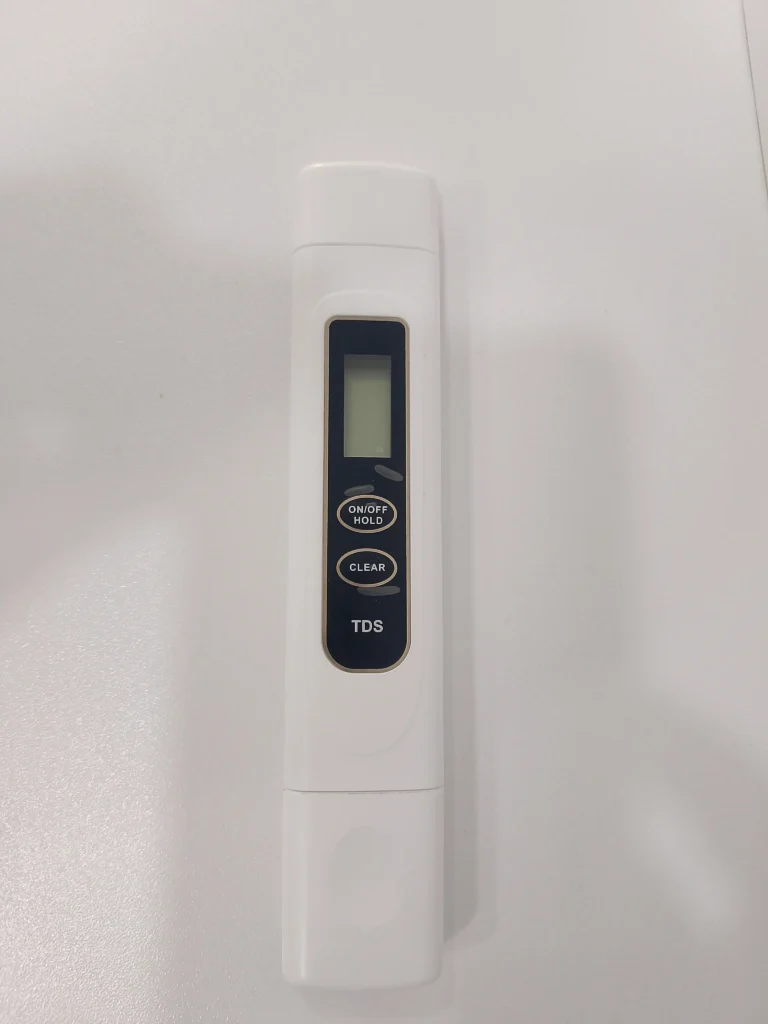
A TDS meter is a handheld digital device that estimates the amount of dissolved solids in water.
The meter measures electrical conductivity and uses that reading to estimate TDS. Results are normally displayed in ppm, meaning parts per million.
This makes a TDS water tester useful for quick comparisons.
For example, a homeowner can test water before filtration and then compare it with water after reverse osmosis. A water-treatment technician can also use the meter during routine system checks.
Nevertheless, a TDS meter does not identify individual contaminants.
It cannot tell you the exact amount of fluoride, lead, arsenic or bacteria in a sample. Therefore, laboratory testing remains important when specific contaminants are a concern.
TDS Levels: What Do Different Readings Mean?
TDS readings can range from very low to very high.
The table below provides a practical way to interpret a TDS meter reading. It should not be treated as a health or safety classification.
| TDS reading | General description | What the reading may indicate |
|---|---|---|
| 0–250 ppm | Very low | Very little dissolved mineral content |
| 251–500 ppm | Low | Relatively low dissolved-solids content |
| 501–750 ppm | Moderate | Noticeable mineral content |
| 751–1,000 ppm | Moderately high | Taste or scaling may become more noticeable |
| 1,001–1,500 ppm | High | Further water-quality assessment is advisable |
| Above 1,500 ppm | Very high | Detailed testing and suitable treatment should be considered |
These ranges are useful for monitoring and comparison. They are not official drinking-water safety limits.
For example, two samples can have the same TDS reading but contain different substances. As a result, the number alone cannot tell you whether the water is suitable for drinking.
The WHO guidance on drinking-water quality does not set a health-based guideline value for TDS itself.
What Is the Best TDS for Drinking Water in Kenya?
There is no single number that can be called the best TDS for drinking water in Kenya.
The reason is simple. TDS combines many dissolved substances into one measurement.
One water sample may contain mostly calcium and magnesium. Another may contain more sodium or chloride. Both could produce a similar reading while having different water chemistry.
WHO has noted that water below about 600 mg/L is generally regarded as having good palatability, while higher levels can affect taste. However, palatability is not the same as safety.
For Kenyan households, the Kenya Bureau of Standards potable-water specification is more relevant when checking applicable local requirements.
A recent Kenyan government drinking-water specification also references TDS values under the applicable standards. The exact requirement should therefore be checked against the current standard being used.
Most importantly, TDS should not be used as the only test for drinking-water safety.
How Much TDS Is Good for Health?
There is no scientifically established TDS level that can be described as the ideal level for health.
WHO does not set a health-based guideline value for TDS as a whole. Instead, the organisation considers TDS mainly in relation to water acceptability and taste.
That makes it risky to say that a reading such as 50 ppm, 100 ppm or 300 ppm is automatically healthier.
A low reading does not prove that water is free from harmful contaminants. Similarly, a higher reading does not automatically mean that the water is dangerous.
Instead, the substances contributing to the reading should be considered.
Is 250 ppm TDS Good for Drinking Water?
A reading of 250 ppm indicates a relatively low dissolved-solids concentration.
For many water sources, such a reading would not be unusual. However, it does not prove that the water is safe to drink.
Other factors still matter, including the source of the water and the presence of specific chemical or microbiological contaminants.
Therefore, use the reading as one part of your water-quality assessment.
Is 500 ppm TDS Safe to Drink?
A reading of 500 ppm does not, by itself, determine whether water is safe.
The number simply indicates the estimated concentration of dissolved solids.
For instance, borehole water with a 500 ppm reading could still require testing for fluoride, nitrate, bacteria or other parameters.
Consequently, a TDS meter should be viewed as a monitoring tool rather than a complete water-safety test.
What Are the Effects of High TDS?
A high dissolved-solids level can affect water in several ways.
Taste
Water with more dissolved minerals and salts may develop a noticeable mineral or salty taste.
As the concentration increases, some people may find the water less pleasant to drink.
Scaling
Certain dissolved minerals can contribute to scale.
This may appear on kettles, taps, shower fittings, water heaters, pipes and other appliances.
The actual scaling potential depends on the water chemistry. Therefore, TDS alone cannot predict how much scale will form.
Water Acceptability
Very high readings can affect how consumers perceive the taste and quality of water.
The WHO information on total dissolved solids notes that high TDS can affect the acceptability of drinking water.
Water-Treatment Requirements
High dissolved-solids levels can also influence the type of treatment required.
For example, a sediment filter is useful for sand and dirt. However, it is not designed to remove dissolved salts.
A different technology may therefore be necessary when the main concern is high TDS.
Does High TDS Mean Water Is Unsafe?
No.
A high reading does not automatically mean that water is unsafe.
TDS is a combined measurement. It does not tell you which substances are responsible for the reading.
For example, a TDS meter cannot determine whether water contains:
- Excess fluoride
- Lead
- Arsenic
- Nitrate
- Bacteria
- Viruses
- Specific pesticides
Likewise, a very low reading does not prove that water is safe.
The WHO drinking-water guidelines consider a much wider range of microbiological and chemical risks.
Therefore, use TDS as one part of a wider water-quality assessment.
How Do You Test TDS in Water?
A digital TDS water tester provides one of the simplest ways to check a sample.
The process is quick and does not require laboratory equipment for the basic TDS reading.
How to Use a TDS Water Tester
Follow these simple steps:
- Collect the water in a clean container.
- Switch on the meter.
- Place the probe into the sample.
- Wait for the reading to stabilise.
- Record the result.
- Remove the probe from the sample.
- Rinse the probe with clean water.
- Replace the protective cap.
For better comparisons, use the same method each time.
You can also test water at different stages:
Source water → Filtered water → RO water
The results can then help you monitor changes after treatment.
TDS Water Tester for Kenyan Homes
A compact meter can be useful for homeowners, landlords, water-treatment technicians and businesses.
Pureflex supplies a digital TDS water tester for checking water and RO systems. The meter can be used for routine measurements of drinking water, borehole water and filtered water.
How Can You Reduce TDS in Water?
The right treatment depends on the cause of the high reading.
Several technologies can reduce dissolved substances. These include:
- Reverse osmosis
- Nanofiltration
- Distillation
- Ion exchange
- Other specialised treatment processes
However, each method works differently.
For a household drinking-water system, reverse osmosis is one of the main technologies used when dissolved solids need to be reduced.
Can Reverse Osmosis Reduce TDS?
Yes.
Reverse osmosis can remove many dissolved solids from water.
During the process, pressure pushes water through a semi-permeable membrane. The membrane allows treated water to pass while rejecting many dissolved substances.
The US Environmental Protection Agency’s explanation of reverse osmosis treatment explains that RO can remove a wide range of contaminants, including many inorganic substances and dissolved solids.
As a result, RO is commonly considered when water has high dissolved-solids content or a salty taste.
Pureflex explains the process in more detail in its guide to how reverse osmosis purifies water.
What Machine Removes TDS From Water?
There is no single machine that suits every water source.
Instead, the treatment should match the actual problem.
| Water problem | Common treatment option |
|---|---|
| Sand and dirt | Sediment filtration |
| Chlorine and some tastes | Activated carbon |
| Microbial concerns | Suitable disinfection |
| Hardness | Water softening or another suitable treatment |
| High TDS | Reverse osmosis |
| Salty water | Reverse osmosis |
| Several water-quality problems | Multi-stage treatment based on testing |
The EPA guide to drinking-water treatment technologies explains that different technologies target different contaminants.
Therefore, testing should come before selecting a treatment machine.
Can a Normal Water Filter Reduce TDS?
Usually, not by a significant amount.
Different filter types perform different jobs.
Sediment Filters
Sediment filters trap suspended particles.
They are useful for sand, dirt, rust and similar particles.
However, dissolved minerals pass through most sediment filters.
Activated Carbon Filters
Activated carbon can reduce chlorine and some substances that affect taste and odour.
It is not normally the main technology for removing dissolved salts.
UV Water Purifiers
UV systems are used for disinfection.
They do not remove dissolved minerals or salts.
Ultrafiltration
UF membranes can remove many particles and microorganisms.
However, conventional UF does not reduce dissolved solids in the same way as RO.
For more information about choosing a suitable system, see this guide to water filters in Kenya.
How to Reduce TDS in Water Naturally
Many homeowners search for natural ways to lower a high reading.
Unfortunately, simple household methods usually do not remove dissolved salts and minerals.
Does Boiling Reduce TDS?
No.
Boiling can help control many microorganisms when performed correctly.
However, dissolved minerals remain in the water.
As some water evaporates, those substances can become more concentrated in the remaining water.
Does Settling Reduce TDS?
No.
Settling can help suspended particles drop to the bottom.
Dissolved substances remain in the water.
Does Cloth Filtration Reduce TDS?
No.
A cloth can trap larger particles.
It cannot remove dissolved salts and minerals.
Does Activated Charcoal Reduce TDS?
Standard activated-carbon filtration is not designed to significantly reduce TDS.
It can still help with other concerns, such as chlorine, taste and odour.
Can Dilution Reduce TDS?
Dilution can produce a lower reading, but it does not actually remove the dissolved substances.
For example, mixing high-TDS water with a suitable lower-TDS source will reduce the final concentration.
However, the second water source must also be suitable for drinking.
Therefore, dilution should not replace proper treatment when contamination is suspected.
How Does an RO Machine Reduce TDS?
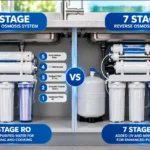
A typical household RO system uses several treatment stages.
The exact design varies, but a common arrangement is:
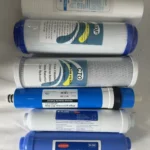
Sediment filter → Carbon filter → RO membrane → Post-filter → Drinking water
First, the pre-filters protect the membrane from particles and certain substances.
Next, the RO membrane separates treated water from a concentrated reject stream.
Finally, the treated water passes to the storage tank or drinking-water tap, depending on the system design.
The EPA information on point-of-use RO systems explains that RO uses pressure to push water through a semi-permeable membrane and creates both treated and reject water streams.
Because RO also produces reject water, system selection and proper installation matter.
High TDS Borehole Water in Kenya
Borehole water is widely used by homes, apartments, farms, businesses and institutions across Kenya.
Its quality can vary significantly from one location to another.
For example, a borehole in Nairobi may have different water chemistry from one in Kiambu or Kajiado. Coastal groundwater can also have different characteristics from groundwater in inland areas.
Some borehole-water concerns can include:
- High dissolved solids
- Hardness
- Fluoride
- Iron
- Manganese
- Chloride
- Sulphates
- Microbiological contamination
Because of these differences, borehole water should be tested before selecting a purification system.
A TDS meter provides a useful starting point. However, laboratory testing is better when you need to identify specific contaminants.
For households using borehole water, Pureflex’s guide on how to purify borehole water at home explains how different treatment options can be matched to different water problems.
TDS in Drinking Water for Kenyan Homes
The simplest approach is:
Test → identify → treat → monitor.
First, test the source water.
Next, identify the main water-quality concerns.
After that, choose a treatment system that addresses those concerns.
Finally, monitor the treated water.
For example, high dissolved solids may point towards RO. Sediment may require a sediment filter. Chlorine or taste concerns may call for activated carbon.
Meanwhile, microbial concerns require an appropriate disinfection method.
For households that want purified water at the kitchen tap, the Pureflex guide to kitchen water purifiers in Kenya explains how the choice of system depends on the water source and treatment requirement.
Is Low TDS Water Always Better?
No.
A very low reading does not automatically mean healthier water.
The number only tells you about the estimated dissolved-solids concentration.
It does not measure every contaminant.
For instance, a low reading does not prove that water is free from bacteria or fluoride.
Therefore, the goal should not be to achieve the lowest possible number.
Instead, the aim should be to provide water that meets the relevant quality requirements and has been treated for the contaminants present.
Should You Reduce TDS in Drinking Water?
That depends on the source and the complete water-quality results.
A high reading deserves investigation, but it should not cause immediate panic.
Start by checking the water source.
Then consider a broader water test if the reading is unusually high or the water has a salty taste, scaling or another noticeable problem.
If testing shows that dissolved solids need to be reduced, RO is one of the main treatment options.
The EPA notes that RO can reduce many dissolved substances, although the process also produces a reject-water stream.
For routine monitoring, a digital TDS meter from Pureflex can help you compare source and treated water.
If your drinking water needs dissolved-solids reduction, an under-sink RO water purifier from Pureflex can provide point-of-use treatment at the kitchen.
TDS in Water Frequently Asked Questions
What does TDS mean?
TDS means Total Dissolved Solids. It describes the combined concentration of dissolved substances in water.
What is the best TDS for drinking water?
There is no single TDS value that can be called the best for health. The substances contributing to the reading and the wider water-quality results matter more.
Is 300 ppm TDS good?
A 300 ppm reading indicates a relatively low dissolved-solids concentration. However, it does not prove that the water is safe.
Is 500 ppm TDS safe?
A 500 ppm reading alone cannot determine drinking-water safety. Other chemical and microbiological tests may still be needed.
Is 1,000 ppm TDS high?
A reading of 1,000 ppm is relatively high compared with many drinking-water sources. Taste and acceptability may become more noticeable. However, the number alone does not identify the substances present.
Does boiling water reduce TDS?
No. Boiling does not remove dissolved minerals and salts. Evaporation can even concentrate them in the remaining water.
Does a water filter reduce TDS?
Some treatment systems can reduce dissolved solids. Standard sediment and carbon filters are not designed for significant TDS reduction, while RO can remove many dissolved substances.
What is the best machine for high TDS water?
Reverse osmosis is one of the main household technologies used to reduce many dissolved solids. The correct system should still be selected after considering the source-water quality.
Can a TDS meter test fluoride?
No. A standard TDS meter cannot measure fluoride specifically. A fluoride-specific test or laboratory analysis is required.
Can a TDS meter detect bacteria?
No. A TDS meter does not detect bacteria or viruses.
Can TDS be reduced naturally?
Simple methods such as boiling, settling and cloth filtration do not remove dissolved salts and minerals. Treatment technologies such as RO are more effective when the goal is to reduce dissolved solids.
Should borehole water be tested before buying a purifier?
Yes. Testing helps identify the actual water-quality problems. As a result, you can choose a purification system based on the water you have rather than assumptions about the water source.
Final Takeaway
TDS is a useful measurement when assessing and monitoring water.
However, the TDS number alone does not tell the complete story.
A digital TDS meter can help Kenyan households compare source water with filtered or purified water. If the reading is high, further testing can help identify what is causing the problem.
For many high-TDS applications, reverse osmosis can reduce a wide range of dissolved substances. The US EPA’s reverse osmosis treatment guidance provides further technical information on the process.
For Kenyan homes using borehole water, the practical approach is simple: test the water, identify the problem, choose the right treatment and monitor the result.
If you want to check your water at home, you can view the Pureflex TDS water tester.
If the water requires dissolved-solids reduction, you can also explore Pureflex under-sink RO water purification systems.
Know your water before choosing your treatment.
Leave a Comment