
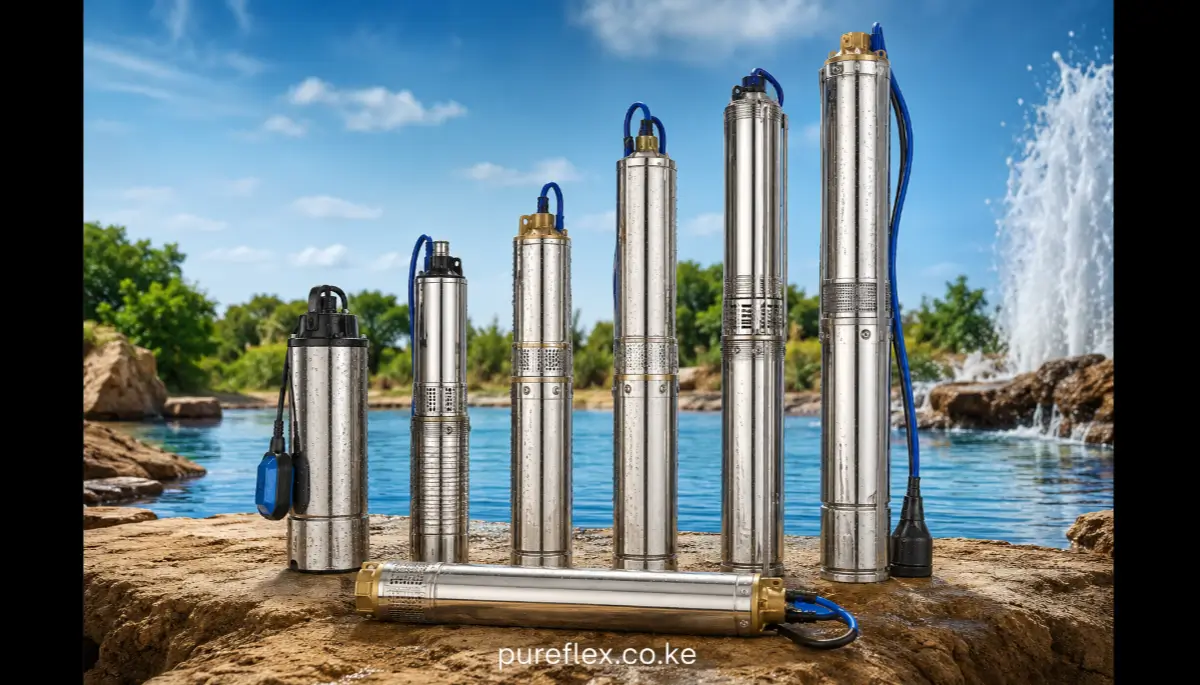
Choosing the right submersible water pump in Kenya is about much more than comparing horsepower and prices. The best pump depends on where the water is coming from, how deep the water source is, how far the water needs to travel, the required flow rate, available electricity, and how the pump will be used.
A pump supplying water from a borehole to a household in Ruiru may have very different requirements from one supplying an apartment building in Nairobi, irrigating a farm in Kiambu, filling tanks in a rural home, or supporting a commercial water system.
Choosing an undersized pump can result in poor water pressure and inadequate flow. Choosing an oversized pump can increase electricity consumption and may create unnecessary stress on the pumping system.
This guide explains how to choose a submersible water pump in Kenya, what specifications matter, how to estimate the right pump size, and what to consider before buying one online.
What Is a Submersible Water Pump?
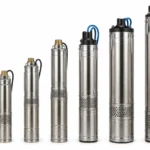
A submersible water pump is a pump designed to operate while submerged in water. Instead of sitting above the water source and drawing water through a suction pipe, the pump is placed inside the water and pushes water toward the destination.
Submersible pumps are commonly used for:
- Borehole water supply
- Domestic water systems
- Apartment buildings
- Irrigation
- Commercial properties
- Farms
- Water storage tanks
- Construction sites
- Industrial applications
- Community water systems
- Rainwater and other suitable water sources
Because the pump operates below the water level, it can be particularly useful for deep water sources where a conventional surface pump may not be suitable.
However, not every submersible pump is suitable for every application. The pump must be matched to the water source and the required duty conditions.
Why the Right Submersible Pump Matters
Buying a pump simply because it has a higher horsepower rating can be a costly mistake.
Two pumps with the same motor power can have significantly different flow rates and maximum heads. A pump that works well for one borehole may perform poorly in another because the water levels, borehole characteristics, pipework and required delivery conditions are different.
The objective should therefore be to find a pump that can provide the required flow at the required head, rather than simply choosing the largest motor available.
For a professional installation, the pump should be selected using the actual characteristics of the water source and the intended water demand.
1. Start With the Water Source
The first question is: Where will the pump get the water?
A submersible pump can be used in several applications, but the specifications required may differ substantially.
Borehole water
Boreholes are one of the most common applications for submersible pumps in Kenya.
Before purchasing a pump for a borehole, establish:
- Borehole depth
- Static water level
- Dynamic water level
- Borehole yield
- Required pumping rate
- Casing diameter
- Pump installation depth
- Distance to the storage tank
- Elevation between the borehole and destination
- Available electricity supply
The borehole yield is particularly important. A powerful pump does not automatically mean that more water can be sustainably extracted from the borehole.
The Water Resources Authority explains that water abstraction is regulated and that borehole pumping must remain within permitted thresholds.
If you are unsure whether your existing borehole water is suitable for household use, it is also worth understanding the difference between water supply and water treatment. A pump moves water; it does not necessarily make the water safe to drink.
For more information, see Is Borehole Water Safe for Drinking?.
Tanks and water storage
A submersible pump may also be used to transfer water into a storage tank.
In this situation, the important considerations include:
- Source water level
- Tank height
- Horizontal pipe distance
- Required filling time
- Pipe diameter
- Number of bends and fittings
- Required flow rate
A pump transferring water from a low-level storage source to a rooftop tank may therefore need different specifications from a pump operating in a deep borehole.
Agricultural applications
Farm irrigation can require substantially higher water volumes than a typical household.
Before choosing a pump, determine:
- Number of irrigation points
- Irrigation method
- Required flow rate
- Operating pressure
- Pumping duration
- Water source yield
- Total pumping distance
- Elevation changes
For larger farms, pump selection should ideally be based on a proper irrigation design rather than a horsepower estimate alone.
Apartments and commercial buildings
Apartment buildings, schools, hotels, offices and commercial premises often have higher and more variable water demand.
The pump may need to work alongside:
- Storage tanks
- Pressure systems
- Float switches
- Level controls
- Control panels
- Backup power
- Filtration equipment
In these installations, selecting the pump based only on the number of occupants can produce an inaccurate result. The design should consider peak demand and the characteristics of the complete water distribution system.
2. Understand Pump Head
One of the most important specifications when choosing a submersible water pump is head.
Head refers to the pressure or energy required for the pump to move water to a particular point. It is commonly expressed in metres.
For example, imagine a borehole where the pump is installed deep underground and water has to be delivered to a tank several metres above ground. The pump needs to overcome not only the vertical distance but also losses caused by the pipework and fittings.
This is why maximum head is not the same as the practical pumping height.
A pump advertised with a maximum head of 100 metres does not necessarily mean it will deliver its rated flow at 100 metres.
The relationship between flow and head is critical.
3. Look at Flow Rate, Not Just Horsepower
Flow rate tells you how much water the pump can deliver over a given period.
It may be expressed as:
- Litres per minute (L/min)
- Litres per hour (L/h)
- Cubic metres per hour (m³/h)
For example, a household may have a relatively modest water requirement, while an agricultural or commercial installation may require a much higher flow rate.
When comparing pumps, look for the pump’s performance curve or flow/head chart.
A pump may be capable of a high flow rate at low head but deliver considerably less water as the required head increases.
Therefore, rather than asking:
“How many horsepower is the pump?”
ask:
“How much water will this pump deliver at my required head?”
That is a much more useful question.
4. Calculate Total Dynamic Head
A useful starting point is to consider the Total Dynamic Head (TDH).
TDH broadly incorporates:
Vertical lift + pressure requirement + friction losses in the pipework
The exact calculation can become technical, particularly for larger installations, but the concept is straightforward.
Suppose water needs to travel:
- From the pumping water level to a tank
- Up a vertical elevation
- Through a long pipeline
- Around several bends
- Through valves and other fittings
All of these factors influence the head the pump must overcome.
A pump selected without considering pipe friction can produce less water at the outlet than expected.
For larger installations, a pump specialist should calculate the system head rather than relying on a simple depth measurement.
5. Consider the Borehole Diameter
For borehole applications, the physical size of the borehole matters.
The pump must physically fit inside the casing while leaving enough clearance for proper operation.
A pump should therefore never be selected without checking the borehole diameter.
The borehole report or completion information can provide useful information about:
- Borehole depth
- Casing diameter
- Water levels
- Yield
- Construction details
If the borehole has already been drilled, obtain these details before ordering a pump.
6. Check the Available Power Supply
The electrical supply available at the installation site also affects pump selection.
Common considerations include:
- Single-phase or three-phase supply
- Voltage
- Motor power
- Starting current
- Cable requirements
- Control equipment
- Protection against voltage fluctuations
Some installations may also use solar power.
For a solar pumping system, the pump cannot be selected independently from the solar system. The pump’s electrical requirements need to be matched with the available solar generation, controller and other components.
For electrical installations, appropriate protection and professional installation are important, particularly where water and electricity are being used together.
7. Consider the Water Quality
The water itself can affect pump selection.
Borehole water, river water, rainwater and other sources may contain different levels of:
- Sand
- Silt
- Sediment
- Iron
- Minerals
- Corrosive substances
- Biological contaminants
A pump designed for relatively clean water may not be suitable for water containing significant quantities of abrasive solids.
If you are unsure about your water quality, consider testing it before selecting the complete pumping and treatment system. KEBS provides information about water testing parameters, including factors such as pH, nitrates, chlorides, iron, lead and other parameters.
You can also read PureFlex’s guide on how to test water quality at home.
8. Choose the Right Pump Material
Pump construction materials matter, particularly where the pump will remain submerged for extended periods.
Depending on the application, you may encounter components made from:
- Stainless steel
- Cast iron
- Engineered plastics
- Other corrosion-resistant materials
The appropriate material depends on the water chemistry, application and pump design.
For example, a pump operating continuously in a challenging water environment may have different material requirements from one used for occasional transfer of relatively clean water.
Don’t choose construction material based on appearance alone. Check the manufacturer’s technical specifications.
9. Consider the Pump’s Operating Duty
Think about how frequently the pump will operate.
There is a difference between:
- Occasional tank filling
- Daily domestic water supply
- Continuous commercial operation
- Irrigation
- Industrial applications
A pump intended for frequent or continuous operation needs to be appropriate for that duty cycle.
Other factors such as motor cooling, starting frequency and control method can become important in demanding installations.
10. Think About Pipe Size
The pipe connected to the pump can significantly affect system performance.
Using a pipe that is too small can increase friction losses and reduce the amount of water reaching the destination.
When planning a system, consider:
- Pump outlet size
- Pipe diameter
- Total pipe length
- Number of bends
- Valves
- Non-return valves
- Elevation
- Required flow
The goal is not simply to connect the pump to whatever pipe happens to be available.
The pump and pipework should be considered as one system.
11. Don’t Choose a Pump Solely by Price
Searching for submersible water pump prices in Kenya is a sensible part of the buying process, but the cheapest pump is not necessarily the most economical choice.
The purchase price is only one part of the overall cost.
Consider:
Purchase price + installation + electrical equipment + pipework + energy consumption + maintenance + replacement costs
A pump that costs less initially but consumes more electricity or fails prematurely may ultimately cost more.
Likewise, buying a significantly oversized pump can mean paying for capacity you do not actually need.
Submersible Water Pump Prices in Kenya
There is no single price for a submersible water pump in Kenya because prices vary according to the pump’s:
- Horsepower
- Flow rate
- Maximum head
- Brand
- Construction materials
- Borehole compatibility
- Motor type
- Application
- Warranty
- Accessories
- Installation requirements
This is why it is better to determine the required specifications before comparing prices.
If you are ready to compare available water equipment, you can browse the PureFlex online shop.
For a quotation or help identifying a suitable pump, you can also contact PureFlex Water Solutions.
What Size Submersible Water Pump Do You Need?
There is no universal “best” horsepower for every application.
A small domestic system may require a relatively modest pump, while a large borehole, apartment block, irrigation system or commercial installation may require considerably more capacity.
Instead of starting with horsepower, start with these questions:
- How much water do you need?
- Where is the water coming from?
- What is the water level?
- How high does the water need to be lifted?
- How far does the water need to travel?
- What pipe diameter will be used?
- What pressure is required at the destination?
- How frequently will the pump operate?
- What electricity supply is available?
- What is the quality of the water?
Once these factors are known, the appropriate pump size becomes much easier to determine.
Submersible Pump for a Home
A domestic installation may involve pumping water from a borehole or underground storage source into a tank.
The required pump depends on the household’s water demand and the characteristics of the water source.
For many homes, the pump is part of a larger system that may include:
- Borehole
- Submersible pump
- Rising main
- Storage tank
- Float switch
- Control panel
- Pressure system
- Filtration
- Drinking-water treatment
If the borehole water will be used for drinking, don’t assume that pumping it into a tank makes it safe. Water quality should be assessed and the treatment system selected accordingly.
Submersible Pump for Apartments
Apartments present a different challenge because water consumption can vary significantly throughout the day.
The design may need to account for:
- Number of apartments
- Number of occupants
- Peak demand
- Storage capacity
- Tank elevation
- Required pressure
- Pumping schedule
- Backup systems
For a large apartment development, professional hydraulic design is preferable to choosing a pump based solely on horsepower.
Submersible Pump for Agriculture
Agricultural pumping is often driven by required flow.
For irrigation, the correct pump depends on the irrigation system and water source.
A farm using drip irrigation may have very different requirements from one using sprinklers or other high-flow irrigation methods.
The pump should therefore be selected based on the actual irrigation design.
Submersible Pump for Commercial Applications
Commercial installations can include:
- Hotels
- Schools
- Restaurants
- Offices
- Workshops
- Factories
- Construction sites
- Commercial farms
These applications may require higher reliability and more careful consideration of backup systems.
For critical installations, it can also be worthwhile to consider what happens if the main pump fails.
Common Mistakes When Buying a Submersible Water Pump
Choosing by horsepower alone
Horsepower is important, but it doesn’t tell you everything about pump performance.
Always consider the pump curve, flow rate and head.
Ignoring borehole yield
A pump should not be selected to extract water faster than the source can sustainably provide.
Ignoring pipe friction
Long or undersized pipework can significantly affect actual performance.
Buying without checking dimensions
A pump must fit the available borehole or water source.
Ignoring water quality
Sand, sediment and aggressive water chemistry can affect pump selection and service life.
Choosing the cheapest option
Purchase price should be considered alongside operating cost, reliability, warranty and suitability.
Oversizing the pump
A larger pump is not automatically better. Oversizing can increase energy consumption and may cause the system to operate outside its ideal conditions.
How to Buy a Submersible Water Pump Online in Kenya
Buying a pump online can be convenient, but customers should have the technical information ready before placing an order.
Ideally, provide:
- Pumping application
- Water source
- Borehole depth, if applicable
- Static and dynamic water levels
- Borehole diameter
- Required flow
- Delivery height
- Approximate pipe distance
- Available electricity
- Existing pump details, if replacing a pump
- Water quality information where available
This allows the seller to determine whether the proposed pump is appropriate rather than simply recommending the most powerful model.
PureFlex Water Solutions provides water equipment for customers in Kenya and can help customers identify suitable equipment based on their application. Products can be ordered online through the PureFlex shop, with deliveries supported countrywide.
For customers who need advice before ordering, contact PureFlex Water Solutions.
Questions About Submersible Water Pumps
What is the best submersible water pump in Kenya?
There is no single pump that is best for every application. The right submersible water pump depends on the required flow, total head, water source, borehole dimensions, water quality, power supply and intended use.
A pump should therefore be selected according to the system rather than simply by brand or horsepower.
How much does a submersible water pump cost in Kenya?
Submersible water pump prices in Kenya vary according to horsepower, flow rate, head, construction, brand, application and other specifications.
For an accurate price, it is better to identify the required pump specifications first.
Which submersible pump is suitable for a borehole?
A borehole pump must match the borehole diameter, water level, yield, required flow and total pumping head.
The pump should also be suitable for the water quality and intended operating conditions.
Can a submersible pump be used for a home?
Yes. Submersible pumps are commonly used in domestic water systems, particularly for pumping water from boreholes and other underground sources to storage tanks.
The correct pump depends on the home’s water demand and the characteristics of the water source.
Can a submersible pump fill a rooftop tank?
Yes. A suitably sized submersible pump can transfer water to a rooftop tank. The required pump depends on the vertical height, water level, pipework, required flow and other system losses.
Does a higher HP submersible pump always provide more water?
No. Horsepower alone does not determine the actual flow delivered by a pump.
The pump’s performance curve shows how flow changes as the required head increases.
Can a submersible pump pump drinking water?
A submersible pump can be used to move water intended for drinking, provided the pump and associated components are appropriate for the application.
However, the pump itself does not purify water. Water quality should be tested and an appropriate treatment system used where necessary.
How long does a submersible water pump last?
Service life varies significantly depending on pump quality, operating conditions, water quality, installation, electrical conditions, maintenance and how frequently the pump operates.
Proper sizing and installation can help avoid unnecessary stress on the equipment.
Can I buy a submersible water pump online in Kenya?
Yes. Buying online can be convenient, particularly when the customer already knows the required specifications.
If you are uncertain about the correct pump, provide the water source, depth, required flow, delivery height, borehole dimensions and available power so that the appropriate equipment can be identified before purchase.
PureFlex Water Solutions offers online ordering through its shop and supports deliveries across Kenya.
Can PureFlex help me choose the right submersible pump?
Yes. Customers can provide their application and available technical information so that the appropriate equipment can be identified.
If you are replacing an existing pump, providing the old pump’s model, horsepower, flow/head information and installation details can also make the selection process easier.
You can contact PureFlex Water Solutions before ordering if you need assistance.
Final Thoughts: Choose the Pump Based on the System
Choosing a submersible water pump in Kenya should start with the water requirement rather than the pump price or horsepower.
Whether the pump is intended for a home, borehole, apartment, farm, commercial property or another application, the key specifications are similar:
Flow + head + water source + borehole dimensions + pipework + power supply + water quality + operating conditions
Getting these factors right can make the difference between a pump that performs reliably and one that struggles to deliver the expected amount of water.
If you are looking for water equipment in Kenya, explore the PureFlex Water Solutions website or browse the online shop to see available products.
For customers who also need drinking-water treatment, PureFlex provides solutions ranging from household filtration to reverse osmosis systems. You can learn more through the guide to the best undersink reverse osmosis systems in Kenya.
PureFlex Water Solutions supports customers across Kenya with online ordering and countrywide delivery.


Leave a Comment