
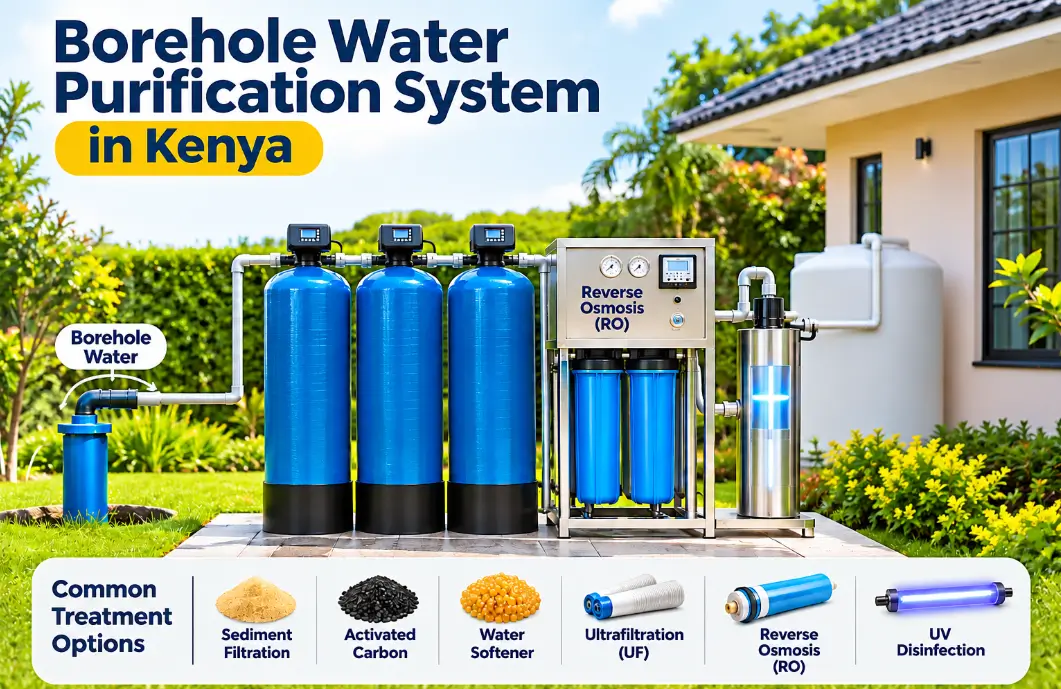
Borehole water provides an alternative water source for homes, farms, offices and commercial properties in Kenya. However, underground water is not always suitable for direct use. It may contain excess fluoride, dissolved salts, iron, manganese, hardness, sediment or harmful microorganisms.
The right borehole water purification system depends on what is present in the water and how the treated water will be used. Some properties need basic filtration to protect plumbing and appliances. Others require advanced treatment to make water suitable for drinking and cooking.
This guide explains the different borehole water treatment options available in Kenya, how they work, what they remove and what determines the installation cost.
Why Does Borehole Water Need Treatment?
Borehole water passes through underground rock formations and soil before reaching the water table. During this process, it can dissolve naturally occurring minerals and pick up other contaminants.
Water quality also varies by location. A borehole in one county may have completely different characteristics from another.
Common borehole water problems include:
- High fluoride: Excess fluoride can make water unsuitable for long-term drinking.
- High salinity: Dissolved salts can give water a salty taste and make it unsuitable for drinking.
- Iron and manganese: These minerals can cause staining, discoloration and metallic tastes.
- Hardness: Calcium and magnesium can cause scale inside pipes, water heaters and appliances.
- Suspended particles: Sand, silt and other sediments can block plumbing and damage equipment.
- Bacteria: Microbial contamination can make untreated borehole water unsafe to drink.
A clear appearance does not guarantee safe drinking water. Some contaminants, including fluoride and nitrates, cannot be identified by sight, smell or taste.
Kenya’s water quality regulations specify limits for several parameters, including fluoride, arsenic, nitrate and total coliforms. These are important considerations when selecting a treatment system.
Some Water Purifiers In Kenya
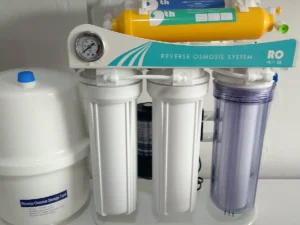
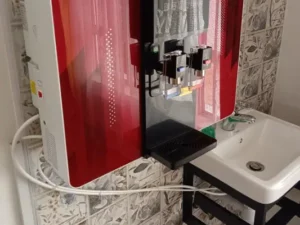
7-Stage Reverse Osmosis Under Sink Water Purifier – 100 GPD
Original price was: KSh 35,000.00.KSh 30,000.00Current price is: KSh 30,000.00. Add to cart7-Stage UnderSink Water Purifier Kenya – RO + UV + UF
Original price was: KSh 35,000.00.KSh 30,000.00Current price is: KSh 30,000.00. Add to cartDomestic Borehole Water Purifier in Kenya – Smart Purifier 1000 LPD
Price range: KSh 55,000.00 through KSh 69,000.00 Select options This product has multiple variants. The options may be chosen on the product pageMunicipal Water Filter System Kenya – Domestic 5-Stage UV Purifier
Original price was: KSh 19,000.00.KSh 16,000.00Current price is: KSh 16,000.00. Add to cartReverse Osmosis System in Kenya – 5 Stage Undersink Purifier
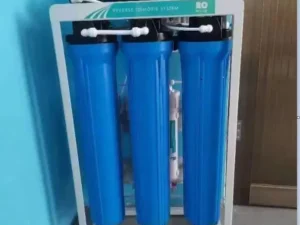
Original price was: KSh 30,000.00.KSh 25,000.00Current price is: KSh 25,000.00. Add to cartWater Purifier System for House – 2500 Liters Per Day RO System
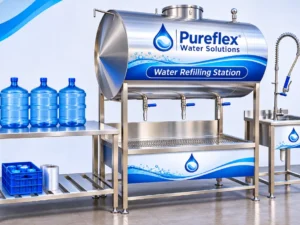
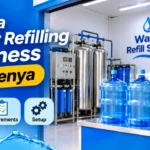
Original price was: KSh 130,000.00.KSh 120,000.00Current price is: KSh 120,000.00. Add to cartWater Refilling Machine in Kenya – Complete Water Refilling Station
Original price was: KSh 180,000.00.KSh 160,000.00Current price is: KSh 160,000.00. Add to cart
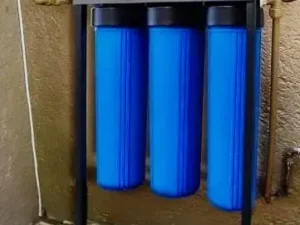
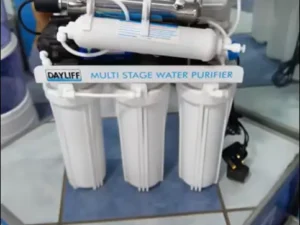
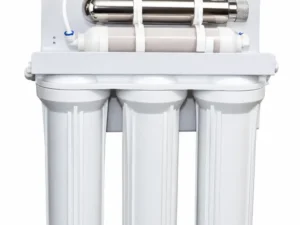
Start With a Borehole Water Quality Test
Before buying a borehole water purifier in Kenya, test the water. This is the most important step in choosing the right equipment.
A laboratory water analysis helps identify the contaminants that need treatment. It also prevents unnecessary equipment purchases.
Important water quality parameters include:
| Parameter | What it helps identify |
|---|---|
| pH | Acidity or alkalinity |
| TDS | Total dissolved substances |
| Fluoride | Excess fluoride |
| Iron | Iron contamination |
| Manganese | Manganese contamination |
| Hardness | Calcium and magnesium |
| Turbidity | Suspended particles |
| Nitrates | Dissolved nitrate contamination |
| E. coli | Possible faecal contamination |
| Total coliforms | Microbial contamination |
A TDS meter provides a quick indication of dissolved solids. However, it cannot identify individual contaminants such as fluoride, arsenic or bacteria.
The process of testing water quality at home can help identify basic water quality concerns, but laboratory testing is necessary for a complete assessment.
Types of Borehole Water Purification Systems in Kenya
There is no single filtration system that treats every borehole water problem. Different technologies target different contaminants.
The following are common options for domestic and commercial water treatment.
1. Sediment and Multimedia Filtration Systems
Sediment filtration is often the first stage of a borehole water filtration system.
It removes suspended particles such as sand, silt, rust and other visible impurities.
A typical arrangement may include:
- Sand or multimedia filter.
- Gravel support media.
- Sediment cartridge filter.
- Automatic or manual backwashing valves.
Multimedia filters can handle higher water flows than small cartridge filters. They also protect downstream equipment from excessive sediment.
Best suited for: Boreholes with sand, silt, turbidity and suspended particles.
However, sediment filtration does not remove dissolved salts, fluoride or most dissolved minerals.
2. Iron and Manganese Removal Systems
Some boreholes contain elevated iron and manganese.
These minerals can cause brown or black staining on sinks, tiles, laundry and plumbing fixtures. They can also affect the taste and appearance of water.
Iron and manganese treatment may involve:
- Aeration or chemical oxidation.
- Catalytic filtration media.
- Manganese dioxide-based media.
- Backwashing filtration vessels.
The correct treatment depends on the concentration, oxidation state, pH and other water characteristics.
Best suited for: Boreholes with iron or manganese problems.
3. Activated Carbon Filtration
Activated carbon removes certain organic compounds and helps reduce unpleasant tastes and odors.
It can also reduce residual chlorine when used in the correct application.
Carbon filters are commonly installed after sediment filtration to protect the media and improve water quality.
Best suited for: Water with unpleasant tastes, odors and certain organic contaminants.
Activated carbon does not remove high concentrations of dissolved salts, fluoride or hardness.
4. Water Softener Systems
Hard borehole water contains elevated calcium and magnesium.
These minerals form scale inside pipes, showerheads, kettles, washing machines and water heaters.
A water softener uses ion exchange to reduce water hardness. It replaces calcium and magnesium ions with sodium or potassium ions, depending on the system.
Best suited for: Boreholes with high hardness and scale formation.
A softener does not disinfect water or remove all dissolved contaminants. It may also require additional treatment where iron and manganese levels are high.
5. Ultrafiltration (UF) Systems
Ultrafiltration uses a membrane with very small pores to separate suspended particles and microorganisms from water.
It can reduce bacteria, protozoa and fine suspended matter when properly selected and operated.
UF systems are useful where the water has low salinity but needs improved particle and microbial filtration.
Best suited for: Borehole water with suspended particles and microbial concerns but without excessive dissolved salts.
Unlike reverse osmosis, ultrafiltration does not remove most dissolved salts, fluoride or hardness.
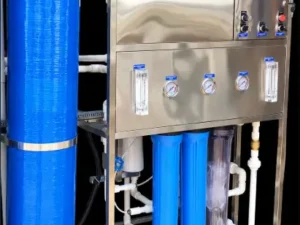
6. Reverse Osmosis (RO) Systems
Reverse osmosis is one of the most effective options for treating borehole water with elevated dissolved salts.
It forces pressurised water through a semi-permeable membrane. The membrane separates treated water from a concentrated reject stream.
A correctly selected RO system can reduce:
- Dissolved salts.
- Excess fluoride.
- Nitrates.
- Many heavy metals.
- High total dissolved solids.
However, RO membranes need suitable pretreatment. High sediment, hardness, iron and other contaminants can reduce membrane performance.
Best suited for: Borehole water with high salinity, fluoride or other dissolved contaminants that require membrane treatment.
For a better understanding of this technology, reverse osmosis water purification explains how the membrane separates contaminants from water.
7. UV Water Disinfection Systems
Ultraviolet treatment uses UV light to inactivate microorganisms.
It provides an additional disinfection barrier against bacteria, viruses and other susceptible microorganisms.
UV treatment does not remove dissolved salts, fluoride, hardness or suspended particles. Water must receive suitable pre-filtration before it enters the UV chamber.
Best suited for: Borehole water that requires microbial disinfection after appropriate filtration.
UV treatment is often installed as the final stage of a domestic or commercial water purification system.
Which Borehole Water Purification System Is Best for Your Home?
The best system depends on the water analysis and the intended application.
Here are some common treatment arrangements.
| Borehole water problem | Recommended treatment |
|---|---|
| Sand and suspended particles | Sediment or multimedia filtration |
| High iron and manganese | Oxidation and specialized media filtration |
| Hard water | Water softener |
| Bad taste and odor | Activated carbon |
| Bacterial contamination | Appropriate disinfection using UV or chlorination |
| High TDS and salinity | Reverse osmosis |
| Excess fluoride | Suitable RO or specialized fluoride removal media |
| Multiple water quality problems | Combined multi-stage treatment |
A property may need more than one technology to achieve the required water quality.
Borehole Water Filtration System for Home: Three Practical Approaches
Homeowners should consider how the water will be used before choosing a treatment arrangement.
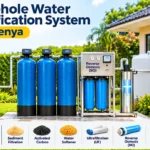
Option 1: Whole-House Water Filtration
A whole-house system treats water before it enters the household plumbing network.
It can include sediment filtration, iron removal, activated carbon, softening and other treatment stages.
This approach helps protect:
- Washing machines.
- Water heaters.
- Shower fittings.
- Kitchen and bathroom plumbing.
- Other household appliances.
The treatment stages depend on the water analysis.
A whole-house water filtration system is worth considering when the objective is to improve water quality throughout the property.
Option 2: Separate Drinking Water Purification
Some homeowners prefer to treat the entire household water supply for general use and install a separate purifier for drinking and cooking.
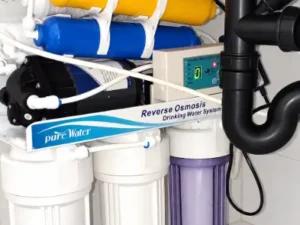
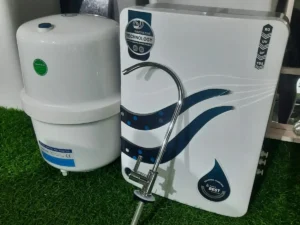
An undersink RO system is one option.
It fits beneath the kitchen counter and supplies purified water through a dedicated faucet.
This arrangement can be suitable when the main household water treatment system does not need to remove all dissolved contaminants.
Option 3: Combined Whole-House and Drinking Water Treatment
This approach uses different systems for different purposes.
For example:
Stage 1: General household treatment
- Multimedia filtration.
- Iron and manganese removal where necessary.
- Carbon filtration.
- Water softening where necessary.
Stage 2: Additional drinking-water treatment
- Fine sediment filtration.
- Activated carbon.
- Reverse osmosis.
- UV disinfection where required.
This arrangement allows each system to perform a specific function. It can also reduce the amount of water that passes through the more expensive RO membrane.
Borehole Water Purification System Price in Kenya
The borehole water purification system price depends on the water quality, treatment capacity, equipment selection and installation requirements.
A small domestic system will have different requirements from a system serving an apartment building, school, hotel or commercial property.
The main cost factors include:
- Water quality: High fluoride, salinity, iron and hardness may require specialised treatment.
- Treatment capacity: A system designed for a large household or commercial property needs higher flow capacity.
- Filtration technology: RO, softeners, UV and specialised media increase the equipment requirements.
- Pretreatment: RO systems may require additional filtration to protect their membranes.
- Automation: Automatic backwashing valves and control systems affect the overall cost.
- Installation: Plumbing, electrical connections, drainage and storage arrangements affect the project budget.
There is no reliable single price for every borehole water purification system in Kenya.
A proper quotation should follow water analysis and an assessment of the required treatment capacity.
For households considering membrane-based treatment, the reverse osmosis machine price in Kenya provides additional context on RO equipment.
Common Mistakes When Choosing a Borehole Water Purifier
Buying a purifier without understanding the water quality can result in poor treatment and unnecessary maintenance costs.
Avoid these common mistakes:
- Buying an RO system without checking water hardness and iron levels.
- Assuming a high TDS reading automatically identifies the contaminant.
- Installing UV without adequate pre-filtration.
- Using a sediment filter to treat dissolved salts.
- Assuming boiling removes fluoride or dissolved salts.
- Selecting equipment without considering household water demand.
- Ignoring membrane replacement and filter maintenance.
Some options In Kenya
7-Stage Reverse Osmosis Under Sink Water Purifier – 100 GPD
Original price was: KSh 35,000.00.KSh 30,000.00Current price is: KSh 30,000.00. Add to cart7-Stage UnderSink Water Purifier Kenya – RO + UV + UF
Original price was: KSh 35,000.00.KSh 30,000.00Current price is: KSh 30,000.00. Add to cartDomestic Borehole Water Purifier in Kenya – Smart Purifier 1000 LPD
Price range: KSh 55,000.00 through KSh 69,000.00 Select options This product has multiple variants. The options may be chosen on the product pageMunicipal Water Filter System Kenya – Domestic 5-Stage UV Purifier
Original price was: KSh 19,000.00.KSh 16,000.00Current price is: KSh 16,000.00. Add to cartReverse Osmosis System in Kenya – 5 Stage Undersink Purifier
Original price was: KSh 30,000.00.KSh 25,000.00Current price is: KSh 25,000.00. Add to cartWater Purifier System for House – 2500 Liters Per Day RO System
Original price was: KSh 130,000.00.KSh 120,000.00Current price is: KSh 120,000.00. Add to cartWater Refilling Machine in Kenya – Complete Water Refilling Station
Original price was: KSh 180,000.00.KSh 160,000.00Current price is: KSh 160,000.00. Add to cart
Frequently Asked Questions About Borehole Water Purification Systems
Which is the best borehole water purification system in Kenya?
The best system depends on the water analysis. Sediment filters suit water with suspended particles, softeners treat hardness, and RO systems address many dissolved contaminants. Some boreholes require a combination of technologies.
How much does a borehole water purification system cost in Kenya?
The price depends on water quality, treatment capacity, equipment and installation requirements. A water analysis is the best starting point for an accurate quotation.
Can reverse osmosis purify borehole water?
Yes. Reverse osmosis can reduce dissolved salts, fluoride, nitrates and many other contaminants. However, the water may require pretreatment to protect the membrane.
Is a UV purifier enough for borehole water?
Not always. UV treatment addresses microorganisms but does not remove dissolved salts, fluoride, iron or hardness. Additional filtration may be necessary.
Can one filtration system treat the entire house?
Yes. A properly designed whole-house system can treat water before it enters the household plumbing. Its treatment stages depend on the borehole water analysis.
How often should borehole water be tested?
Test the water before selecting a treatment system. Repeat testing after significant changes in water quality, repairs or treatment system modifications. Periodic testing also helps verify that the system continues to perform as required.
Get the Right Borehole Water Purification System for Your Property
Every borehole has different water characteristics. The most effective solution starts with understanding those differences.
Pureflex Water Solutions supplies and installs domestic and commercial water purification equipment in Kenya. We help property owners identify suitable filtration and purification technologies based on their water quality, intended application and treatment capacity.
Whether you need a whole-house filtration system, an iron removal plant, a water softener, an ultrafiltration system or a reverse osmosis plant, the right combination can be selected to address your specific water challenges.
For borehole water purification systems in Nairobi, Kilifi, Machakos, Kajiado, Nakuru, Mombasa and other parts of Kenya, contact Pureflex Water Solutions.
Leave a Comment