
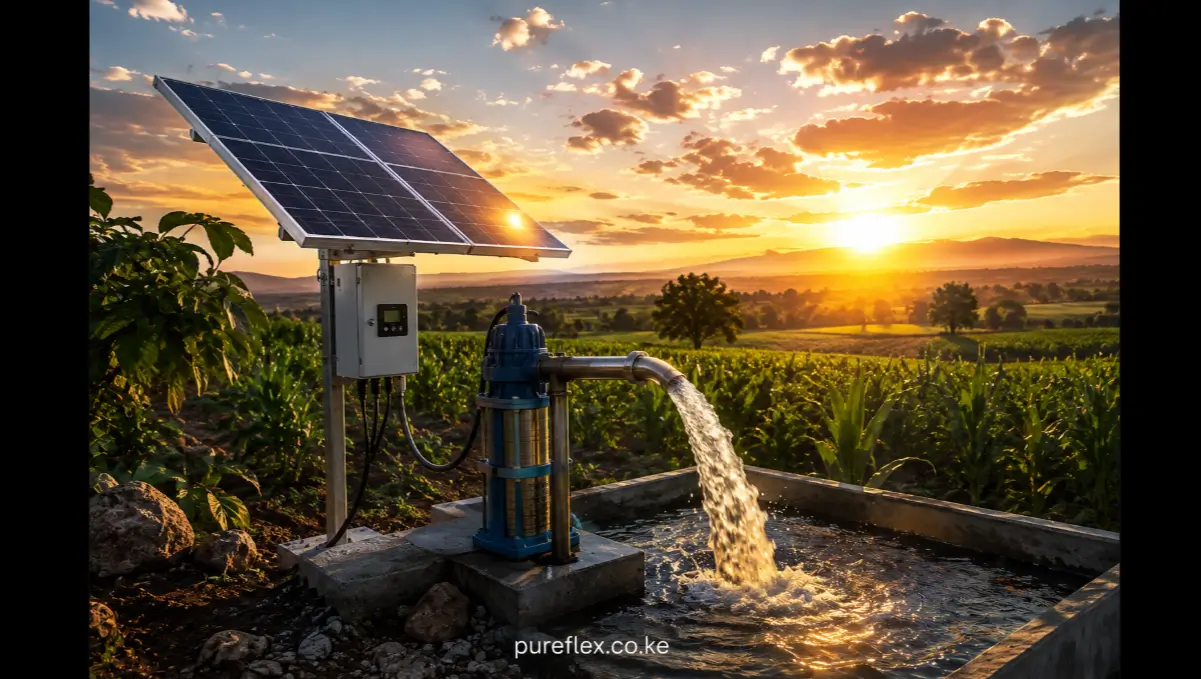
A solar water pump can provide a practical way to move water from a borehole, well, water pan, river or other suitable source without relying entirely on grid electricity or fuel-powered generators.
For homes, farms, schools, apartments, commercial properties and community water projects across Kenya, solar pumping can be used to move water into storage tanks or directly to suitable points of use.
But choosing a solar pump is not simply a matter of buying a pump and connecting it to a few solar panels. The pump, solar array, controller, water source, pipework and storage system need to work together.
This guide explains how solar water pumps work, how to choose the right system in Kenya, what affects the price, what is involved in installation, common problems, and what to consider before buying a solar pump online.
What Is a Solar Water Pump?
A solar water pump is a water-pumping system powered partly or entirely by electricity generated from solar photovoltaic (PV) panels.
Depending on the design, the system may include:
- Solar panels
- Solar water pump
- Pump controller
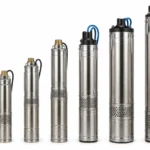
- Submersible or surface pump
- Electrical protection equipment
- Solar cables
- Mounting structures
- Water-level sensors
- Storage tank
- Pipes and fittings
- Optional batteries or backup power
The solar panels generate electricity during daylight hours. The controller manages the electrical supply to the pump, allowing the pump to operate under the conditions for which the system was designed.
A solar water pump can therefore be particularly useful in locations where grid electricity is unavailable, unreliable or expensive to operate.
Kenyan public-sector water projects increasingly use solar pumping for boreholes and other water infrastructure. For example, county energy planning documents describe solar pumping as an option for boreholes and water pans, with hybrid solar/grid or solar/generator arrangements considered where pumping requirements extend beyond available sunshine hours.
How Does a Solar Water Pump Work?
The basic process is straightforward:
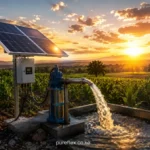
Sunlight → Solar panels → Controller → Pump → Water storage or distribution
During daylight, the solar panels generate electricity. The controller regulates the electrical power supplied to the pump.
The pump then moves water from the source to the required destination.
Depending on the system, water may be pumped:
- From a borehole to an elevated tank
- From a well to a storage tank
- From a water pan to a livestock trough
- From a reservoir to an irrigation system
- From a source to a community water storage facility
- From a storage tank to an agricultural distribution system
One important advantage is that water can often be stored in a tank instead of storing large amounts of electricity in batteries.
For many water-pumping applications, this can make the system simpler than a battery-dependent setup.
Where Are Solar Water Pumps Used in Kenya?
Solar pumping is suitable for many applications.
1. Borehole Water Pumping
Boreholes are one of the most common applications.
A solar borehole pump can lift water from underground and deliver it to a storage tank for domestic, agricultural, institutional or commercial use.
Before selecting the pump, however, you need information about the borehole, including:
- Borehole depth
- Static water level
- Dynamic water level
- Borehole yield
- Casing diameter
- Required daily water volume
- Required flow rate
- Delivery height
- Pipe distance
- Available solar resource
A solar pump should be selected according to the actual borehole conditions rather than simply choosing the largest available pump.
If you are considering a conventional submersible pump as part of the system, see the PureFlex guide to submersible water pumps.
2. Agricultural Irrigation
Solar water pumps can be used for irrigation where water needs to be moved from a borehole, river, reservoir, water pan or other suitable source.
Applications can include:
- Drip irrigation
- Sprinkler irrigation
- Greenhouse irrigation
- Horticulture
- Livestock watering
- Smallholder farming
- Commercial agriculture
The pump must be matched to the irrigation system’s flow and pressure requirements.
A pump that is suitable for filling a storage tank may not necessarily be suitable for directly operating a high-pressure irrigation system.
3. Domestic Water Supply
A solar pump can supply water for homes where a suitable water source is available.
A typical arrangement might be:
Borehole → Solar pump → Storage tank → Household distribution
The advantage of storing water is that the household does not necessarily need the pump to operate whenever someone opens a tap.
4. Schools and Institutions
Schools, health facilities, religious institutions and community projects can also use solar-powered pumping systems.
In areas where grid electricity is unavailable or unreliable, solar pumping can provide an alternative energy source for moving water.
5. Livestock Watering
Solar pumping can move water from boreholes, wells and water pans into livestock troughs or storage tanks.
This can be particularly useful in areas where livestock watering points are located far from reliable grid electricity.
6. Commercial Water Systems
Hotels, apartments, businesses, farms and other commercial properties can use solar pumping as part of their water infrastructure.
For larger installations, the system should be professionally designed around the actual water demand, pumping head, daily operating requirements and available solar resource.
What Are the Main Components of a Solar Water Pumping System?
A solar pumping system is more than just a pump and solar panels.
Solar panels
The PV panels generate electricity from sunlight.
The number and capacity of panels required depend on the pump’s electrical requirements and the expected solar conditions.
Solar pump
The pump converts electrical energy into hydraulic energy to move water.
It may be:
- Submersible
- Surface-mounted
- Centrifugal
- Borehole-specific
- Designed for high-head applications
- Designed for high-flow applications
The correct type depends on the water source and system requirements.
Pump controller
The controller manages the electrical power supplied to the pump.
Depending on the system, it may provide functions such as:
- Pump protection
- Monitoring
- Speed control
- Dry-run protection
- Overload protection
- Voltage management
The exact functions depend on the controller model.
Water-level sensors
Sensors can help protect the pump from operating under unsuitable water-level conditions.
For example, a borehole system may use sensors to prevent pumping when the available water level falls below a defined operating condition.
Storage tank
Water storage can be an important part of a solar pumping system.
Instead of relying on the pump to operate whenever water is needed, solar energy can be used during the day to fill a tank, with water then being distributed when required.
Pipes and fittings
The pipework carries water from the source to the storage or distribution point.
Pipe diameter, distance, bends, valves and elevation all influence the pumping requirements.
How to Choose a Solar Water Pump
The most important question is not:
“Which solar pump has the highest horsepower?”
Instead, ask:
“How much water do I need, from what source, and how high and far does it need to be pumped?”
1. Determine the Water Source
Identify whether the water is coming from:
- Borehole
- Well
- River
- Water pan
- Reservoir
- Storage tank
- Dam
- Other suitable source
Different sources can require different pump designs.
2. Determine the Required Water Volume
Estimate how much water is needed per day.
For example, domestic consumption, livestock, irrigation and commercial operations can have very different daily requirements.
A solar pumping system should be designed around the required daily volume rather than choosing a pump based solely on horsepower.
3. Determine the Required Flow Rate
Flow rate describes how quickly water needs to be delivered.
It may be expressed in:
- Litres per minute
- Litres per hour
- Cubic metres per hour
A farm that needs several thousand litres per hour will require a different system from a household with a smaller daily requirement.
4. Calculate the Required Head
Head represents the energy required to move water through the system.
It is affected by:
- Vertical elevation
- Water level
- Pipe length
- Pipe diameter
- Valves
- Bends
- Required outlet pressure
A pump must be able to provide the required flow at the actual operating head.
5. Check the Water Source Yield
This is particularly important for boreholes.
A pump should not be selected simply because it can extract a large amount of water. The water source must be capable of supplying the required volume.
An oversized pump can cause the water level to fall excessively or result in inefficient operation.
6. Consider Solar Availability
Solar pump performance depends on the available solar resource.
Panel orientation, shading, seasonal conditions and system design all matter.
A Kenyan solar pumping installation should therefore be assessed for the specific site rather than assuming that the same panel configuration will work equally well everywhere.
7. Decide Whether You Need Water Storage
For many applications, storing water is preferable to storing electricity.
For example:
Solar panels → Pump → Elevated tank → Irrigation/household
The tank acts as a form of energy storage because water pumped during sunny periods can be used later.
However, some systems may require batteries or another backup arrangement depending on the application.
How Much Is a Solar Water Pump in Kenya?
The answer depends heavily on the size and design of the complete system.
When people search for “how much is a solar water pump in Kenya,” they may actually be asking about one of several different things:
- Pump only
- Pump and controller
- Solar panels and pump
- Complete solar pumping system
- Borehole solar pumping installation
- Solar irrigation system
- Solar pump with storage and distribution
These can have substantially different prices.
The main factors affecting cost include:
- Pump capacity
- Motor power
- Flow rate
- Pumping head
- Number and capacity of solar panels
- Controller
- Cable length
- Mounting structure
- Sensors
- Pipework
- Storage tank
- Installation
- Transport
- Site conditions
For this reason, a reliable quotation should be based on the actual application rather than a generic “solar pump price.”
You can browse the PureFlex online shop to see available water equipment or contact PureFlex Water Solutions for assistance with selecting equipment.
How to Install a Solar Water Pump
Solar pumping installations involve both water-system design and electrical work.
A typical professional installation involves:
- Assessing the water source.
- Determining the required flow and head.
- Selecting the appropriate pump.
- Sizing the solar PV system.
- Selecting the appropriate controller and protection equipment.
- Designing the pipework.
- Installing the solar mounting structure.
- Installing and connecting the pump and associated equipment.
- Testing the system.
- Commissioning the installation.
The exact installation procedure varies by pump, controller, site and electrical configuration.
Because the system combines electricity, water and mechanical equipment, installation and electrical connections should be carried out by appropriately qualified professionals rather than treated as a simple DIY project. Kenyan solar PV work is subject to regulatory requirements, and EPRA documentation specifies licensing requirements for personnel undertaking solar PV and solar water-pumping work.
Kenyan water-sector specifications also emphasize proper installation, commissioning and electrical compliance for solar pumping systems.
How to Connect a Solar Water Pump
The exact connection arrangement depends on whether the pump is DC or AC and on the controller used.
A typical system includes:
Solar PV array → Pump controller → Pump
However, the actual electrical configuration can vary considerably between products.
Some systems may use:
- DC pumps
- AC pumps
- Variable-frequency drives
- Dedicated solar pump controllers
- Hybrid solar/grid systems
- Solar/generator backup
For this reason, customers should use the wiring diagram and installation instructions supplied for the specific pump and controller.
Incorrect electrical connections can damage equipment and create serious safety risks. Professional installation is recommended for the electrical side of a solar pumping system.
How to Connect Solar Panels to a Water Pump
Solar panels are normally connected to the pump through the appropriate controller or power-management equipment rather than simply wiring panels directly to any pump.
The correct configuration depends on:
- Pump voltage
- Pump type
- Panel voltage
- Panel power
- Controller specifications
- Number of panels
- Series/parallel configuration
- Cable requirements
The solar array must be matched to the pump and controller.
A mismatch can result in poor performance, controller faults or equipment damage.
For this reason, the connection should follow the manufacturer’s electrical design and be completed by a qualified installer.
How Does a Solar Pump Controller Work?
The controller is the link between the solar power source and the pump.
Depending on its design, it can regulate the power supplied to the motor and provide protection against unsuitable operating conditions.
A solar pump controller may help manage:
- Variable solar power
- Motor speed
- Overload
- Dry running
- Voltage fluctuations
- Pump starting
- Pump stopping
- Water-level signals
More advanced controllers may also provide monitoring information.
The controller is therefore an important part of the system and should be selected together with the pump rather than as an unrelated component.
How to Reset a Solar Pump Controller
There is no universal reset procedure for every solar pump controller.
Different controllers can use different methods, buttons, displays and fault codes.
If a controller displays a fault:
- Stop using the system if the fault indicates an electrical, motor or dry-run problem.
- Record the displayed fault code or warning.
- Check the manufacturer’s documentation for the specific controller.
- Have a qualified technician assess the system if the fault persists.
Repeatedly resetting a controller without identifying the underlying problem can allow a pump or electrical fault to continue.
Why Has My Solar Pump Stopped Working?
A solar water pump can stop operating for several reasons.
Possible causes include:
- Insufficient solar power
- Heavy shading
- Controller fault
- Water-level protection
- Dry-run protection
- Electrical fault
- Damaged cable
- Pump fault
- Sensor problem
- Blocked pipework
- Mechanical problem
- Incorrect system configuration
Start by identifying whether the problem is related to the solar power supply, controller, pump or water system.
If an electrical fault is suspected, do not open or modify electrical equipment yourself. Have the system assessed by a qualified technician.
How to Repair a Solar Water Pump
Solar pump repairs depend on the nature of the fault.
A professional technician may need to determine whether the problem originates from:
- PV panels
- Controller
- Wiring
- Sensors
- Pump motor
- Pump hydraulics
- Pipework
- Water source
- Mechanical components
A useful approach is to diagnose the entire system rather than immediately replacing the pump.
For example, a pump that appears not to be working may actually be receiving insufficient electrical power or may have stopped because of a water-level protection function.
If your system is under warranty, contact the supplier before attempting repairs or replacing components.
What Size Solar Panel Do You Need for a Water Pump?
There is no single solar panel size that works for every water pump.
The required PV array depends on:
- Pump motor power
- Pump efficiency
- Controller requirements
- Required daily water volume
- Pumping head
- Available sunshine
- Desired operating hours
- Seasonal conditions
- System losses
The pump and PV system should therefore be sized together.
For example, Kenyan project specifications show that solar pumping systems can vary considerably in pump capacity and PV array size depending on the required water volume and pumping head.
What Is the Most Powerful Solar Water Pump?
There is no universally “most powerful” solar water pump that is best for every situation.
Large solar pumping systems can be designed for substantial water requirements, but increasing pump capacity also increases the requirements for:
- Solar generation
- Controller capacity
- Electrical infrastructure
- Pipework
- Water source yield
- Storage
- Installation
The correct question is therefore not “What is the most powerful solar pump?”
It is:
“What solar pump can reliably deliver the required flow at the required head?”
Which Solar Pump Is Best?
The best solar water pump is the one that matches the complete water system.
For a borehole, the selection should consider the borehole diameter, water levels, yield and required head.
In the case of irrigation, the pump should match the required flow and pressure while for domestic use, the system should match household demand and storage requirements.
For commercial applications, reliability, operating hours and backup arrangements become increasingly important.
There is no single brand, horsepower or model that is automatically the best choice for every installation.
Solar Pump vs Electric Water Pump
Both systems can perform the same basic function: moving water.
The difference is primarily the energy source.
| Feature | Solar Water Pump | Conventional Electric Pump |
|---|---|---|
| Primary energy source | Solar PV | Grid electricity |
| Grid connection | Not necessarily required | Usually required |
| Daytime operation | Well suited | Possible |
| Night operation | Depends on storage/backup | Usually straightforward |
| Fuel requirement | None | None |
| Solar panels | Required | Not required |
| Battery | Optional depending on design | Not normally required |
| Suitable for off-grid sites | Yes | Limited unless another power source exists |
A hybrid system can combine solar with grid electricity or a generator where the application requires pumping outside the available solar period.
Kenyan county projects have used or considered hybrid solar/grid and solar/generator configurations where daily pumping requirements cannot be met by solar alone.
Solar Water Pumping Without Batteries
A solar water pump does not always need batteries.
For many water systems, the preferred approach can be:
Solar panels → Pump → Water tank
The tank stores the pumped water rather than the system storing electricity.
This can simplify the system and avoid some of the replacement and maintenance considerations associated with batteries.
However, the appropriate design depends on when water is required and how much storage is available.
Benefits of Solar Water Pumps in Kenya
Solar pumping can offer several advantages.
Reduced dependence on grid electricity
A properly designed solar system can operate without a conventional grid connection.
Useful for remote locations
Solar pumping can be particularly practical where extending grid electricity would be difficult or expensive.
No fuel required for solar operation
Unlike generator-driven pumping, the solar energy source does not require regular diesel or petrol purchases.
Suitable for water storage
Solar energy can be used during daylight hours to fill a storage tank for later use.
Useful for agriculture
Solar pumping can provide an energy source for irrigation in suitable locations.
Can be designed as a hybrid system
Solar can be combined with grid or generator backup where required.
Limitations of Solar Water Pumps
Solar pumping is not automatically the best solution for every site.
Potential limitations include:
- Higher initial equipment cost
- Reduced output during poor solar conditions
- Need for adequate space for PV panels
- Theft or vandalism risk
- Requirement for appropriate system design
- Dependence on water storage where pumping is primarily daytime
- Additional equipment such as controllers and protection systems
A good system design should account for these factors before installation.
Solar Water Pumps for Boreholes
A solar borehole pump can be an attractive option for homes, farms, schools and commercial properties with a suitable borehole.
However, the borehole should be assessed before selecting the pump.
Important information includes:
- Total borehole depth
- Static water level
- Dynamic water level
- Borehole yield
- Casing diameter
- Daily water demand
- Required flow
- Total pumping head
The pump should then be selected to deliver the required water without exceeding the sustainable yield of the borehole.
Solar Water Pumps for Irrigation
For agricultural users, pump selection should begin with the irrigation requirement.
Consider:
- Crops being irrigated
- Irrigated area
- Irrigation method
- Daily water requirement
- Required operating pressure
- Water source
- Elevation
- Distance from source to field
A solar pump for a small drip-irrigation system may have very different specifications from one designed for large-scale sprinkler irrigation.
Solar Water Pumps for Homes
A domestic solar pumping system can be designed around the household’s daily water requirement.
A typical setup may involve:
Borehole → Solar pump → Storage tank → Household
The storage tank allows water pumped during sunny periods to remain available when the sun is not shining.
If the source is a borehole, the pump should be selected using the borehole’s actual water levels and yield.
Solar Water Pumps for Apartments and Commercial Buildings
Larger buildings may require significantly more water than an individual household.
An apartment or commercial system may therefore need:
- Larger pumps
- Multiple pumps
- Larger solar arrays
- Larger storage tanks
- Automatic controls
- Backup power
- Pressure management
- Professional hydraulic design
The system should be designed around peak water demand rather than average consumption alone.
Solar Water Pump Maintenance
Regular maintenance can help identify problems before they become expensive failures.
Maintenance may include:
- Checking solar panels for dirt and shading
- Inspecting visible cables and connections
- Checking the controller for fault indications
- Monitoring pump performance
- Checking water flow
- Inspecting storage tanks
- Checking pipework and valves
- Monitoring water levels
- Reviewing unusual changes in electricity or pump performance
The exact maintenance schedule should follow the equipment manufacturer’s recommendations.
For systems installed in remote locations, it is particularly useful to monitor changes in performance rather than waiting for complete failure.
How to Buy a Solar Water Pump Online in Kenya
Buying a solar pump online can be convenient, but customers should have as much technical information as possible before ordering.
Ideally, provide:
- Water source
- Borehole depth, where applicable
- Static water level
- Dynamic water level
- Borehole diameter
- Required daily water volume
- Required flow rate
- Delivery height
- Approximate pipe distance
- Available storage capacity
- Existing pump specifications, if replacing a pump
- Available power or solar requirements
This information makes it easier to determine whether a particular solar pump is suitable.
PureFlex Water Solutions provides water equipment for customers in Kenya, with online ordering and countrywide delivery. You can browse the PureFlex shop or contact PureFlex Water Solutions if you need assistance before purchasing.
Frequently Asked Questions About Solar Water Pumps
What is a solar water pump?
A solar water pump is a pumping system powered by electricity generated from solar photovoltaic panels. It can be used to move water from sources such as boreholes, wells, reservoirs and water pans to tanks or distribution systems.
How does a solar water pump work?
Solar panels generate electricity, which is managed by a suitable pump controller and supplied to the pump. The pump then moves water from the source to a tank or other destination.
How much is a solar water pump in Kenya?
There is no fixed price because the cost depends on the pump capacity, head, flow rate, solar panel capacity, controller, installation requirements and other components. A complete solar pumping system will cost more than the pump alone.
How much is a solar water pump in Kenya for a borehole?
The cost depends on the borehole depth, water level, required flow, pumping head, pump capacity, PV array, controller, cable, mounting structure and installation. A site-specific quotation is more useful than a generic price.
What size solar panel do I need for a well pump?
The required solar panel capacity depends on the pump’s electrical requirements and the amount of water that needs to be pumped. The pump, controller and PV array should be sized as one system.
Can a solar water pump work without batteries?
Yes. Many systems can pump water during daylight into a storage tank without using batteries. Whether batteries are needed depends on when water must be pumped and the design of the system.
Can a solar water pump work at night?
A solar-only system normally requires sufficient stored energy or another power source for night-time pumping. Water storage can often be used instead, allowing water pumped during the day to be used at night.
Why is my solar pump not working?
Possible causes include inadequate solar power, shading, controller faults, water-level protection, electrical problems, sensor faults or pump failure. The fault should be diagnosed before replacing components.
How do I reset a solar pump controller?
There is no universal reset procedure because controller designs differ. Use the documentation for the specific controller and investigate any fault code before repeatedly resetting the system.
Can I install a solar water pump myself?
Solar water pumping involves electrical, mechanical and hydraulic components. The installation should be designed and commissioned by appropriately qualified professionals, particularly where electrical connections and borehole equipment are involved.
Can a solar pump be used for irrigation?
Yes. Solar pumps can be used for irrigation when the pump’s flow, head and operating conditions match the irrigation system and water source.
Can a solar pump be used for a borehole?
Yes. Solar borehole pumps are used in domestic, agricultural, institutional and commercial water systems. The pump must be matched to the borehole diameter, water levels, yield, required flow and total head.
What is the most powerful solar water pump?
There is no single most powerful pump that is suitable for every application. Larger systems can be designed for high water requirements, but the pump must be matched to the water source, required flow, head, solar array and pipework.
Which solar pump is best?
The best solar pump depends on the application. A pump for a domestic borehole will have different requirements from one serving an irrigation scheme, apartment building or commercial water system.
Can PureFlex help me choose a solar water pump?
Yes. Customers can provide information about their water source, required flow, pumping height, borehole details and intended application so that suitable equipment can be identified.
You can contact PureFlex Water Solutions before ordering or browse the PureFlex online shop.
Conclusion
A solar water pump in Kenya can be an effective way to move water for homes, farms, boreholes, apartments, schools, businesses and other applications, particularly where reducing dependence on grid electricity or fuel is important.
The most important step is choosing the system based on the actual water requirement.
Before buying, establish:
Water source + daily water requirement + flow rate + pumping head + borehole conditions + solar resource + storage requirements + pipework
Do not choose a solar pump simply because it has the highest horsepower or the largest number of solar panels.
The right system is the one that can reliably deliver the required amount of water under the actual conditions at the site.
For customers looking for water-pumping equipment in Kenya, PureFlex Water Solutions offers online ordering and supports countrywide delivery. Customers who are unsure which pump or system is appropriate can contact PureFlex before placing an order.
PureFlex Water Solutions — water-pumping solutions for homes, farms, boreholes, apartments and commercial applications across Kenya.

Leave a Comment