
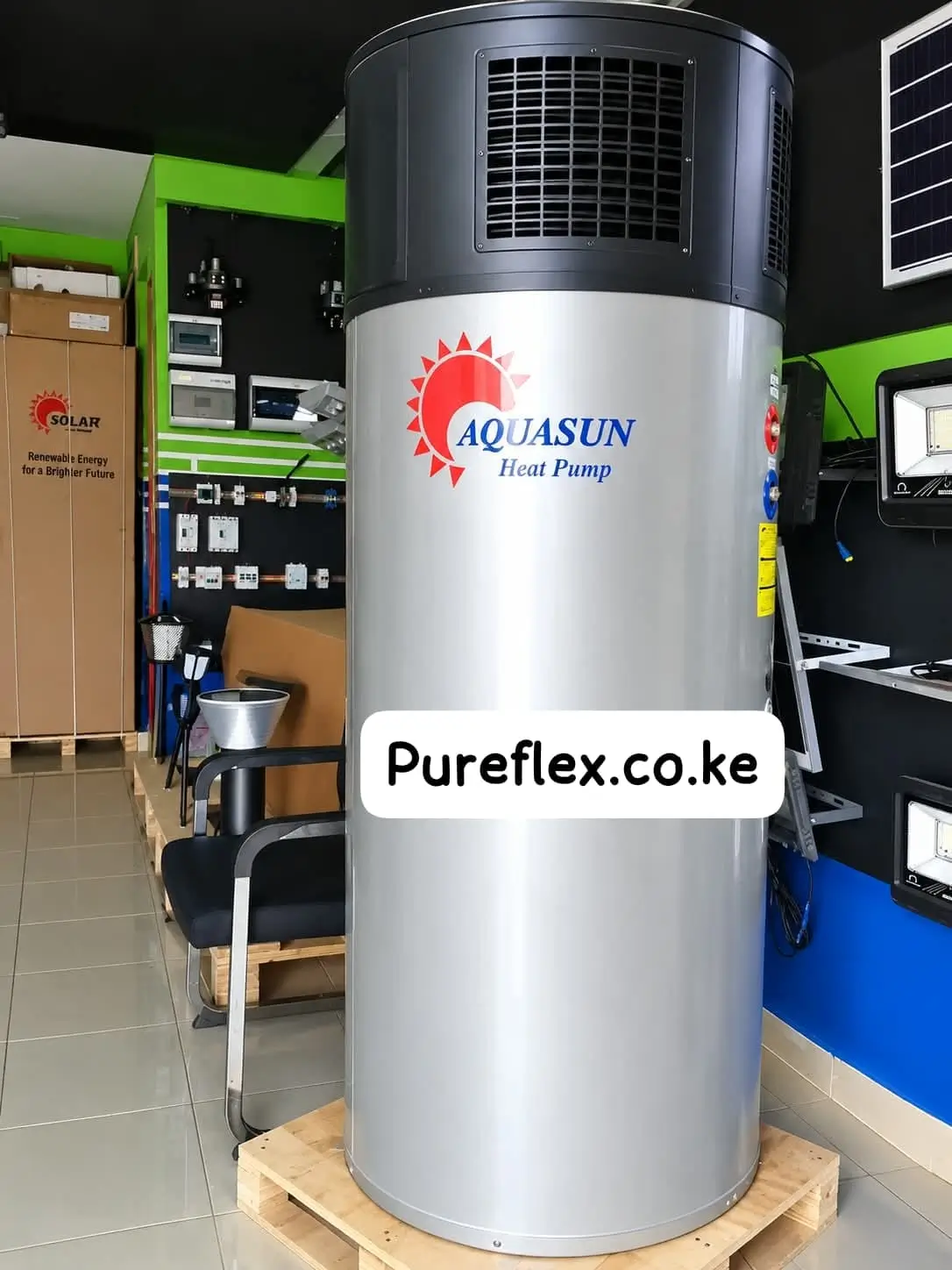
Choosing a water heater for your home involves more than finding a reliable source of hot water. Electricity consumption, installation costs and long-term maintenance also matter. For Kenyan homeowners looking to improve energy efficiency, a heat pump water heater is an option worth understanding.
But what is a heat pump, how does it work, and is it better than a solar water heater or an ordinary electric geyser?
A heat pump water heater uses electricity to transfer heat from the surrounding air into water stored in a tank. Because it moves heat rather than generating all of it directly, it can use significantly less electricity than a conventional electric-resistance water heater.
This guide explains how heat pumps work, their benefits, installation requirements, estimated heat pump water heater prices in Kenya and the factors to consider before buying one.
What Is a Heat Pump?
A heat pump is a device that transfers heat from one location to another using electricity. Instead of producing all its heat directly, it collects heat from an existing source and moves it to where it is needed.
In a heat pump water heater, the system extracts heat from the surrounding air and transfers it to water inside a storage tank.
Heat pumps are used in residential homes, apartments, hotels, hospitals, gyms and other commercial properties that require regular hot water.
Unlike a conventional electric geyser, which heats water using an electrical resistance element, a heat pump uses a refrigeration cycle involving a compressor, evaporator, refrigerant and heat exchanger.
This process allows the system to deliver more heat energy than the electrical energy it consumes under suitable operating conditions.
For Kenyan households with several bathrooms or frequent hot water demand, a heat pump can be an alternative to conventional electric water heating.
How Does a Heat Pump Water Heater Work?
Understanding how a heat pump water heater works makes it easier to see why it can reduce electricity consumption.
The system operates similarly to a refrigerator in reverse. A refrigerator removes heat from its interior and releases it into the surrounding air. A heat pump water heater collects heat from the surrounding air and transfers it to water.
The process follows four main stages.
1. The system collects heat from the air
A fan draws surrounding air across an evaporator containing refrigerant. The refrigerant absorbs heat and changes state as part of the refrigeration cycle.
2. The compressor increases the temperature
The compressor raises the refrigerant’s pressure and temperature. This prepares the refrigerant to transfer heat to the water.
3. Heat moves into the water tank
The hot refrigerant transfers its heat through a heat exchanger to the water stored in the tank. The water gradually reaches the temperature set on the system.
4. The system maintains the hot water supply
The insulated tank stores hot water for showers, baths and other household uses. When the water temperature drops, the system can operate again to restore the required temperature.
According to the US Department of Energy’s Building Science Education resource, heat pump water heaters can be two to three times more efficient than conventional electric-resistance water heaters. Actual efficiency depends on the equipment, installation and operating conditions.
Benefits of a Heat Pump Water Heater
A heat pump water heater can offer several advantages over conventional electric water heating.
Lower electricity consumption
The main advantage is energy efficiency. A heat pump transfers heat instead of relying entirely on an electrical element to generate it.
Depending on the model and household usage, this can reduce the electricity needed to heat water. Homes that consume large amounts of hot water may benefit most from evaluating the potential savings.
Hot water without relying directly on sunshine
A heat pump can operate during the day or at night when electricity is available and operating conditions are suitable.
This makes it an option for households that need hot water outside daylight hours or have family members who shower at different times.
Suitable for homes and commercial properties
Heat pump water heaters come in different capacities and configurations. Depending on the model, they can serve family homes, apartments, guest houses, hotels, gyms and other premises with regular hot water requirements.
Correct sizing is essential to ensure that the system can meet peak demand without excessive reliance on backup electric heating.
Compatibility with solar photovoltaic systems
A compatible heat pump can use electricity generated by solar photovoltaic panels. With suitable system design, this can reduce the amount of electricity purchased from the grid.
This differs from a solar thermal water heater, which collects heat directly from sunlight.
Potential long-term savings
Although the initial purchase price can be higher than that of a conventional electric geyser, lower electricity consumption may offset part of the difference over time.
The actual payback period depends on equipment cost, installation charges, electricity tariffs, daily hot water consumption and maintenance expenses.
Heat Pump vs Solar Water Heater in Kenya
Heat pumps and solar water heaters can both reduce dependence on conventional electric water heating, but they use different energy sources.
A heat pump uses electricity to move heat from the air into water. A solar water heater collects heat from sunlight and transfers it to water.
The best option depends on your property’s hot water requirements, installation space and budget.
| Feature | Heat pump water heater | Solar water heater |
|---|---|---|
| Main energy source | Heat from air and electricity | Sunlight |
| Operation at night | Can heat water using electricity | Relies on previously heated and stored water |
| Cloudy weather | Can continue operating | Solar heating output may decrease |
| Roof space | Not always required | Usually requires suitable collector space |
| Electricity consumption | Generally lower than direct electric heating | Often low, depending on the design |
| Initial cost | Depends on capacity and configuration | Depends on collector type and capacity |
| Hot water availability | Depends on tank capacity and recovery rate | Depends on stored heat and available sunlight |
Which is better for your home?
A solar water heater may be suitable if your property receives good sunlight, has sufficient roof space and you want to minimise purchased energy for water heating.
A heat pump may be more suitable if you need hot water outside peak sunshine hours or want to reduce electricity consumption without relying directly on solar thermal collectors.
The two technologies can also complement a solar photovoltaic system where the electrical installation supports it.
If you are considering solar water heating, explore the Seven Stars 200L solar water heater to review an available alternative.
Heat Pump Water Heater Prices in Kenya
The heat pump water heater price in Kenya depends on the brand, tank capacity, efficiency rating, system design and installation requirements.
As a preliminary budgeting guide, residential heat pump water heaters may cost approximately KSh 160,000 to KSh 300,000 or more for the equipment. This is an indicative estimate, not a verified current price for a specific model or a Pureflex quotation. Confirm current availability and pricing before making a purchasing decision.
| Approximate capacity | Indicative equipment budget |
|---|---|
| 100–150 litres | KSh 160,000–210,000 |
| Around 200 litres | KSh 200,000–250,000 |
| 250–300 litres | KSh 230,000–320,000 or more |
| Commercial applications | Requires a project-specific quotation |
These ranges are intended for preliminary budgeting only. Actual prices may fall outside them depending on the manufacturer, system type and specifications.
Installation costs may be charged separately. Additional expenses can include plumbing alterations, electrical work, drainage, mounting and other site-specific requirements.
Before buying a heat pump water heater in Kenya, ask the supplier to confirm:
- The equipment model and tank capacity.
- The purchase price and installation charges.
- The rated heating output and efficiency.
- The electrical supply requirements.
- Warranty coverage for the tank, compressor and other components.
- Delivery arrangements and maintenance support.
Compare the total installed cost with the expected electricity savings rather than choosing a system based on its purchase price alone.
How to Choose the Right Heat Pump for Your Home
Selecting the correct heat pump requires an assessment of your household’s hot water demand and installation conditions.
Household size and water consumption
A small household with one bathroom will have different requirements from a large family with several bathrooms.
Consider the number of occupants, shower schedules, baths and other hot water uses. Hotels and gyms require a separate assessment of peak demand.
Tank capacity and heating rate
Tank capacity determines how much hot water can be stored. The heating rate determines how quickly the system can replenish hot water after use.
A larger tank is not always the best choice. The system should match your consumption patterns, available space and recovery requirements.
Energy efficiency
Compare the manufacturer’s coefficient of performance (COP) and rated heating output. A COP of 3, for example, means that the system delivers approximately 3 kWh of heat for every 1 kWh of electricity consumed under the stated test conditions.
Actual performance may vary with air temperature, water temperature and operating settings.
Installation space
The system needs adequate airflow, access for maintenance and suitable drainage where condensate is produced. Some models are designed for indoor installation, while others use a split configuration with separate outdoor and indoor components.
Warranty and after-sales support
Check the warranty period, availability of spare parts and access to qualified technicians. Confirm the maintenance schedule before purchasing.
How to Install a Heat Pump Water Heater
Installing a heat pump water heater requires proper positioning, plumbing, electrical connections and testing. The installation must follow the manufacturer’s instructions and applicable Kenyan electrical and plumbing requirements.
The general installation process includes the following steps.
- Assess the property. Determine daily hot water demand, available space, electrical supply and the location of bathrooms and other outlets.
- Choose the appropriate unit. Select the capacity and model based on water consumption, heating requirements and installation conditions.
- Prepare the installation area. Provide a stable support surface, sufficient airflow, maintenance access and a suitable condensate drainage route where required.
- Connect the plumbing. A qualified installer connects the cold-water inlet and hot-water outlet, together with the required valves and safety devices.
- Complete the electrical installation. Ensure that the power supply, circuit protection, earthing and isolation comply with the equipment specifications and applicable requirements.
- Test and commission the system. Check for leaks, confirm drainage, test the controls and safety devices, and verify that the water heats correctly.
- Explain operation and maintenance. The installer should explain temperature settings, operating modes and routine maintenance requirements.
For further guidance, ENERGY STAR’s heat pump water heater installation guide explains important considerations such as airflow, drainage, pipe insulation and access for servicing.
These steps provide a general overview. Always follow the specific installation manual for the selected model, and use appropriately qualified personnel for electrical and refrigerant-system work.
Heat Pump Water Heater Maintenance
Regular maintenance helps maintain efficiency and reliable operation.
Common maintenance tasks include:
- Cleaning or checking air filters according to the manufacturer’s instructions.
- Keeping air intake and discharge paths unobstructed.
- Inspecting condensate drains and ensuring water drains correctly.
- Checking plumbing connections for leaks.
- Inspecting safety valves and other protective components.
- Monitoring unusual noises, error codes or changes in heating performance.
- Arranging professional servicing according to the manufacturer’s schedule.
Dusty environments may require more frequent filter cleaning. Avoid opening refrigerant components or attempting electrical repairs unless qualified to do so.
Frequently Asked Questions About Heat Pumps
1. What is a heat pump in simple terms?
A heat pump is a device that uses electricity to transfer heat from one place to another. A heat pump water heater collects heat from the surrounding air and transfers it to water stored in a tank.
2. How does a heat pump water heater work?
It uses a fan, evaporator, refrigerant and compressor to collect heat from the air. A heat exchanger then transfers that heat into the water tank.
3. How much does a heat pump water heater cost in Kenya?
The price depends on capacity, brand, system configuration and installation requirements. Residential equipment may cost approximately KSh 160,000–300,000 or more as an indicative budgeting range. Request a current quotation for an accurate price.
4. Is a heat pump cheaper to run than an electric geyser?
It can be. Heat pumps can use considerably less electricity than conventional electric-resistance water heaters because they transfer heat instead of generating it entirely through resistance heating. Actual savings depend on equipment performance, usage and electricity tariffs.
5. Does a heat pump work at night?
Yes. An air-source heat pump can heat water at night when electricity is available and operating conditions are within the manufacturer’s specifications.
6. Is a heat pump better than a solar water heater?
Neither option is automatically better for every property. Solar water heaters rely on sunlight and stored heat, while heat pumps use electricity to transfer heat from the surrounding air. Compare installation costs, operating costs and your daily hot water requirements before choosing.
7. Can a heat pump supply hot water to several bathrooms?
Yes, if the system is correctly sized. Tank capacity, heating rate, peak demand and plumbing design determine how effectively it can serve multiple bathrooms.
8. How long does a heat pump water heater last?
Service life depends on build quality, installation, operating conditions, water quality and maintenance. Ask the supplier about the expected service life and warranty coverage for the tank, compressor and other components.
9. Can a heat pump work with solar panels?
Yes, provided the heat pump and electrical system are compatible. A properly designed solar photovoltaic system can supply some or all of the electricity required during suitable operating periods.
10. Is a heat pump suitable for homes in Kenya?
A heat pump can suit many Kenyan homes and businesses. The appropriate model depends on household demand, ambient conditions, installation space, electricity supply and budget.
11. Does a heat pump require maintenance?
Yes. Typical tasks include checking air filters, maintaining airflow, clearing condensate drains and arranging professional servicing when required.
12. Can a heat pump replace a solar water heater?
In many cases, a correctly sized heat pump can meet the same hot water requirements. The best replacement depends on the existing plumbing, hot water demand, installation space and expected running costs.
Choose the Right Water Heating Solution
A heat pump water heater can be a practical option for households and businesses seeking to reduce electricity consumption while maintaining a reliable hot water supply. However, the right choice depends on the property’s demand, the equipment specifications, the initial investment and the cost of operation over time.
Before purchasing, compare heat pumps with solar water heaters and conventional electric geysers. Confirm the tank capacity, installation requirements, warranty and current price to avoid choosing a system that does not meet your needs.
Explore the Pureflex Water Solutions for water and heating solutions, or browse the Pureflex blogs for more practical guides on choosing equipment for your property.
Need help choosing a water heating solution? Contact Pureflex Water Solutions to enquire about available options and obtain guidance on selecting a system suited to your property’s hot water requirements.


Leave a Comment